Form I-290B after a denial: motion to reopen, motion to reconsider, or appeal
9 mins read | Oct 16, 2026
WHICH RECORDS COUNT
Contributor
Tukki
Reading time
9 mins read
Date published
Sep 14, 2026
The most useful O-1 visa checklist is the one you start a year early. By the time a petition is being assembled, the evidence either exists or it doesn't. The records that carry a case are usually the ones created long before anyone mentioned a visa.
Ask most people what evidence they need and they reach for a document their own company wrote describing their project. A tidy one-page summary of the work, produced for the file. That is the easiest document to make and the hardest one to corroborate.
What carries weight is the organic record:
All of it existed while you were doing the work, for reasons that had nothing to do with immigration.
This article is the evidence layer. For the eight criteria themselves and who tends to fit them, start with our O-1A visa guide, then come back here for what to keep.
Talk to an immigration attorney about your O-1 evidence
A letter drafted in 2026 about work you did in 2023 is an assertion. The 2023 artifact is what makes the assertion checkable, and that difference is what an adjudicator is reading for.
USCIS does not dismiss letters. Its Policy Manual guidance on O-1 beneficiaries says detailed letters from experts explaining the nature and significance of a contribution are valuable. It adds that they are most valuable alongside corroborating documentation.
The letter supplies the expert judgment. The contemporaneous record supplies the proof that the thing described happened the way it is described.
There's a structural reason this matters. USCIS reads the record in two steps.
Satisfying three criteria does not end the analysis. A case built on parallel assertions with nothing underneath it can clear the first step and still struggle at the second.
Thin corroboration is one of the patterns behind the most common O-1A RFE reasons. A Request for Evidence (RFE) is USCIS asking for exactly the material you could have saved two years earlier.
None of this makes letters optional. They remain part of almost every petition, and our guide to O-1A reference letters covers who to ask and what a strong one contains. The point is what sits beneath them.
Proving extraordinary ability comes down to what you can put in front of an adjudicator. Work through the table below by asking three questions for each criterion:
The third question is the one nobody asks until it's too late.
| Criterion | What to save | Where it lives | Who else has a copy |
|---|---|---|---|
| Awards and prizes | The announcement, the selection criteria, the size of the applicant pool, the names of the judges | The organizer's website, your inbox, the award certificate | The awarding body's program office, the comms team that announced it, your co-recipients |
| Membership in selective associations | Your admission letter, the criteria in force the year you were admitted, who reviewed you | The association's member portal, your inbox | The association's secretariat, whoever nominated you |
| Published material about you | The full piece with title, author, outlet and date, saved as a PDF and as an archived link | The outlet's site, which redesigns and deletes | The journalist, your employer's comms or PR team, the agency that pitched the story |
| Judging the work of others | The invitation, the assignment, and proof you completed the review | The conference or journal review platform, which closes after the cycle | The program chair, the journal's editorial office, the platform administrator |
| Original contributions of major significance | Design docs, commit and code review history, patent filings, citation counts, adoption and usage numbers, the message where another team picked up your method | Internal repositories and wikis, your patent counsel's file, scholarly citation databases | Co-authors, patent counsel, the team or customer that adopted the work |
| Scholarly articles | The published version, proof of publication, your listed authorship | The publisher's site, preprint servers, your own drive | Co-authors, the journal, your institution's repository |
| Critical or essential role | Org charts, your offer letter and scope, board and pitch decks that name you, launch announcements, output metrics tied to your work | Company drive, your work email, the investor data room | Your manager, investors who received the deck, the board secretary, the client |
| High salary or remuneration | Contracts, offer letters, pay statements, equity grant documents, comparative wage data for your role and city | The payroll portal, which you lose on your last day | Your payroll provider, the recruiter who placed you, your accountant, the cap table administrator |
Two rows deserve extra attention while you still have access. Critical role evidence is the hardest to reconstruct, because org charts get redrawn and launch emails get archived. High salary evidence is the easiest to lose, because payroll systems cut you off the day you leave.
Our breakdown of how to document a leading or critical role goes deeper on what makes that evidence land.
Some of the strongest material in an O-1 file has an expiry date nobody warns you about, and it is almost always tied to access rather than to time.
A former employer's Slack or Teams history goes dark the moment your account is deactivated. It takes with it the threads where your work was debated, praised, and adopted. The same happens to internal wikis, design review tools, and shared drives.
Repositories are worse. A private repo you contributed to for three years can vanish from your view in a single offboarding ticket. The commit history that shows what you built and when goes with it.
Publications move too. Outlets redesign, paywall their archives, or shut down, and a profile that was live when it was published can be a dead link two years later. Save a PDF and an archived snapshot the week the piece runs.
Then there are people. Each of the following is a potential letter, and each one is easier to reach while the working relationship is current:
Someone who changes companies, retires, or simply forgets the detail of your contribution still writes a letter, just a much thinner one.
If you do nothing else, do this. It takes an afternoon and it changes what's available to you a year from now.
That last step is the cheapest insurance in this entire O-1 visa checklist. A dated email written for a real reason is a contemporaneous record, and it also gives a future letter writer something concrete to work from.
Filing sooner than a year from now changes the order of the work rather than the method, so work backwards from what you can still reach.
If one of the listed criteria isn't readily applicable to your occupation, the petitioner may submit comparable evidence for that criterion. The rule sits at 8 CFR 214.2(o)(3)(iii)(C), the section of the immigration regulations covering O-1A evidence.
This works criterion by criterion rather than as an all-or-nothing test. A founder with no scholarly articles can offer something comparable in that slot while meeting the other criteria normally.
Two conditions travel with it. The petition has to explain why the criterion doesn't readily apply to your occupation, because USCIS treats a general unsupported assertion as unpersuasive. And you still need at least three criteria satisfied in total, whether by listed evidence, comparable evidence, or a mix.
This is another argument for keeping the organic record. Comparable evidence tends to be the material a job genuinely produces:
The O-1 is a nonimmigrant visa, so your employer or agent files Form I-129, the Petition for a Nonimmigrant Worker, on your behalf. As of September 2026, the government fees break down like this.
| Fee | Regular petitioner | Small employer | Nonprofit |
|---|---|---|---|
| I-129 filing fee, O petition | $1,055 | $530 | $530 |
| Asylum Program Fee | $600 | $300 | $0 |
Premium processing, requested on Form I-907, carries a $2,965 fee and a guaranteed 15 business day response. Regular processing times move. Check the current figure for your service center on the USCIS case processing times tool rather than relying on a number you read somewhere.
Fees and processing times are current as of September 2026. USCIS updates these periodically, so check the linked official pages for the latest figures.
Our breakdown of O-1 visa cost covers the full budget, including attorney fees.
The record has to keep growing after approval because of duration. An O-1 is granted for the time needed to complete the event or activity, up to three years. Extensions come in increments of up to one year each under 8 CFR 214.2(o)(12)(ii).
Every extension is another look at whether the work continues. If a green card is the eventual goal, the evidence compounds. The EB-1A extraordinary ability green card runs on a related but separate standard with its own criteria, so treat them as two cases rather than one.
Read EB-1A compared with O-1A before assuming a file built for one will carry the other.
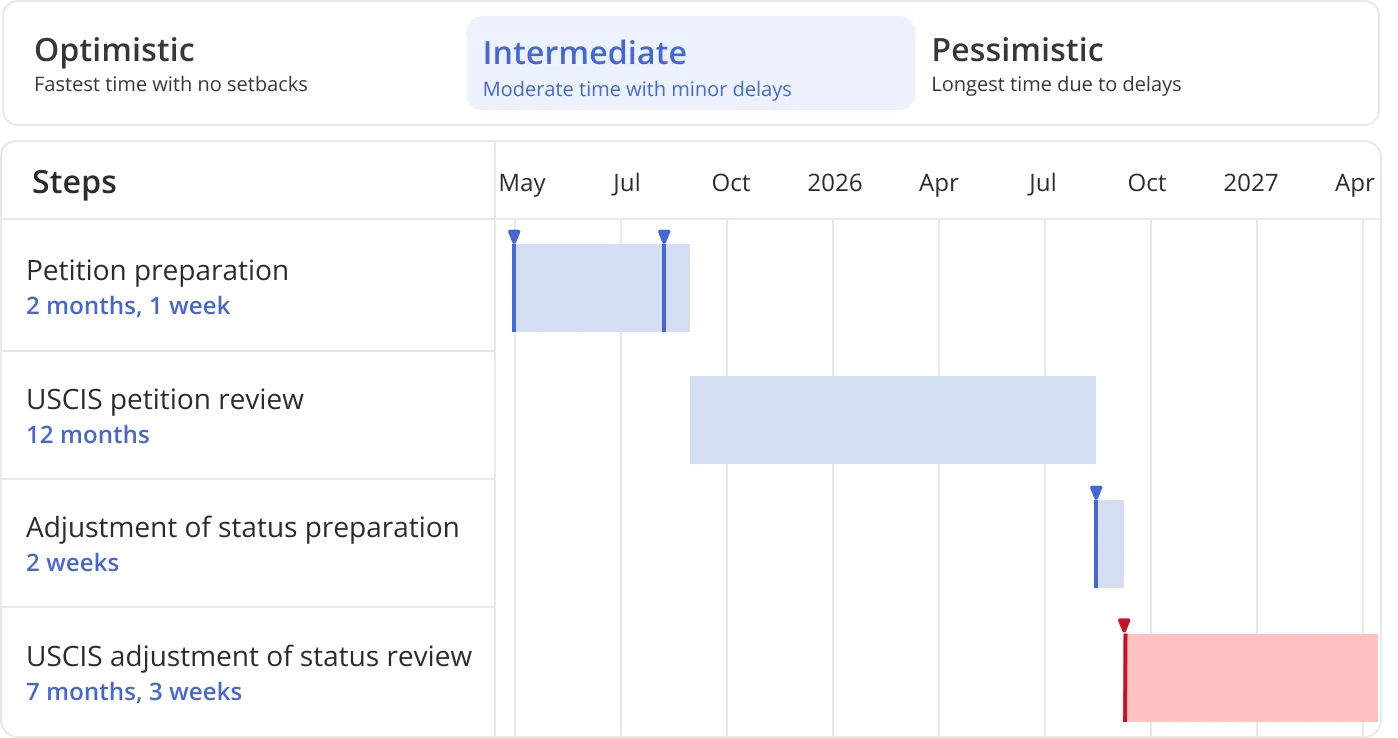
What usually separates a thin petition from a strong one is twelve months of small saving decisions. Each one is made by someone who knew what would matter later. Those decisions are available to you right now, for free, in the accounts you still have access to.
Tukki is a U.S. immigration provider working with skilled professionals on extraordinary ability cases, from the O-1A work visa through to the EB-1A green card. Our attorneys read your record as it stands, tell you which criteria it already reaches and which need building, and say what to start collecting before anything is filed. You can see a personalized price and timeline with our pricing tool.
If you're a year out, that's the best time to have this conversation. If you're three months out, it's still worth having.
WE CAN HELP
Need more clarity?
Find quick answers to frequent visa questions from our legal experts
Can we file a cap-exempt petition and move the employee to our commercial entity later?
Moving to cap-subject employment means the new petition is subject to the cap. The exemption belongs to the qualifying employment, so it does not travel with the person.
Concurrent employment is the arrangement that lets both jobs run at once, for as long as the exempt one continues.
Is a P-3 visa easier to get than an O-1B?
They test different things rather than sitting on a difficulty scale. P-3 tests whether the program is culturally unique. O-1B tests whether you have reached distinction in your field.
An artist can be strong on one and weak on the other in either direction.
Do startup founders qualify for the O-1 visa?
Yes. The O-1A visa is available to individuals with extraordinary ability in business, and startup founders frequently qualify.
Achievements like raising venture funding, winning accelerator spots, earning press coverage, building innovative products, and holding leadership roles all map to the 8 O-1A criteria. You need to meet at least 3 of the 8 criteria with strong supporting evidence.
Which work visas do not require an employer sponsor?
Among green cards, the EB-1A (extraordinary ability) and EB-2 NIW (national interest waiver) allow self-petition, so the individual files without an employer or a PERM labor certification. The E-2 doesn't use a traditional employer either, since it's based on the applicant's own investment.
Every other major work visa, including the H-1B, L-1A, O-1, TN, and the standard EB-2 and EB-3 green cards, requires an employer or a job offer.
Is it mandatory to hire a lawyer for an O-1 or EB-1A petition?
No. Technically you can self-file (for EB-1A) or have an employer file without an attorney. However, due to the complexity of the evidence, most applicants strongly benefit from legal representation.
Other blogs for every step of your visa journey
Form I-290B after a denial: motion to reopen, motion to reconsider, or appeal
9 mins read | Oct 16, 2026
EB-2 NIW approval rate: what the published numbers show and where cases fail
8 mins read | Oct 15, 2026
Form I-539: how to extend or change your status without leaving the U.S.
8 mins read | Oct 14, 2026