Your immigration forms - what each one is for and what to check before you sign
9 mins read | Oct 13, 2026
COMPARING THE TWO PATHS TO PROVING EXTRAORDINARY ABILITY IN THE U.S.
Contributor
Tukki
Reading time
10 mins read
Date published
Jan 18, 2026
Both the EB-1A and O-1A visas are designed for individuals who can demonstrate extraordinary ability in their field. Despite the similar terminology, the USCIS eligibility criteria used to evaluate each category differ significantly. Most importantly, they lead to very different immigration outcomes.
The EB-1A is an immigrant visa that grants a green card and permanent residence in the United States, while the O-1A is a nonimmigrant work visa that must be renewed upon expiration. The EB-1A also allows for self-petitioning, meaning no employer sponsorship is required, whereas the O-1A requires a U.S. employer or agent sponsor willing to file and support the petition.
If you're trying to figure out which path makes sense for your immigration situation, the answer depends on where you are in your career, how strong your evidence is right now, and what you're ultimately trying to achieve. Let's break down both options so you can make an informed decision.
Both EB-1A and O-1A visas target individuals with extraordinary ability, but they operate under different legal frameworks and produce different immigration results. This table outlines the main distinctions USCIS considers when evaluating each option.
| Factor | O-1A visa | EB-1A green card |
|---|---|---|
| Visa type | Nonimmigrant (temporary) | Immigrant (permanent) |
| Immigration outcome | Temporary work authorization (up to 3 years) | Lawful permanent residence (green card) |
| Sponsorship requirement | U.S. employer or agent required | Self-petition allowed |
| Eligibility criteria | 8 criteria (meet at least 3) | 10 criteria (meet at least 3) |
| Standard of proof | Lower evidentiary threshold | Higher evidentiary threshold |
| Petition form | Form I-129 | Form I-140 |
The O-1A visa is typically used as a temporary pathway that allows professionals to work in the U.S. while continuing to build their profile, whereas the EB-1A visa represents a long-term immigration outcome through permanent residence.
Although both visas require strong evidence of extraordinary ability, they have different purposes, sponsorship requirements, and level of scrutiny. Understanding how these categories compare can help you decide whether to pursue one first or whether a combined O-1A to EB-1A visa strategy makes sense for your case.
The O-1A is classified as a non-immigrant visa, which means it provides temporary authorization to live and work in the United States. While it allows qualified individuals to work in their field of expertise, holding an O-1A status does not, by itself, place a beneficiary on a direct path to permanent residence.
An initial O-1A petition may be approved for up to three years. Extensions are typically granted in one-year increments, although USCIS may approve up to three years when a new event or qualifying activity justifies it. Many professionals remain on O-1A status for several years while building their profile and preparing for a future employment-based green card application. The O-1A is often used as a temporary or transitional strategy, especially for business and startup founders.
To qualify for an O-1A visa, you must demonstrate extraordinary ability by meeting at least 3 of the following 8 USCIS criteria:
Notice that these criteria are broad. You don't need to be famous or have won major international awards. What matters is demonstrating that you're significantly above average in your field. For someone in tech, this might mean leading a team that shipped an important product, having patents, speaking at industry conferences, or earning a salary in the top percentile for your role.
The O-1A visa does not allow self-petitioning. To file an O-1A petition, the applicant must have either a U.S. employer willing to act as the petitioner or a U.S.-based agent authorized to file on their behalf.
This sponsorship requirement creates a degree of dependency that can be challenging for certain profiles, particularly entrepreneurs, independent consultants, or freelancers.
For founders and business owners, however, this does not mean that self-sponsorship is allowed. Instead, a founder-owned U.S. company may act as the petitioner, provided it is properly structured to demonstrate a valid employer–employee relationship and independent control.
Sponsorship does not require a large or well-established corporation. Startups and small companies frequently sponsor O-1A petitions, as long as they are willing to assume the legal responsibilities associated with being a petitioner.
Without a qualifying employer or agent relationship in place, an O-1A petition cannot be filed.
The EB-1A is an immigrant visa category, meaning it leads directly to lawful permanent residence (a green card). Once an EB-1A petition is approved and the immigrant visa process is completed, you may live and work in the United States indefinitely and may later apply for U.S. citizenship if eligible.
Unlike most employment-based green card categories, the EB-1A allows for self-petitioning. You do not need a job offer, employer sponsorship, or labor certification.
For many individuals, the EB-1A represents the preferred long-term immigration outcome due to its independence, flexibility, and permanent status.
The EB-1A category includes 10 criteria, of which an applicant must satisfy at least 3
The first 8 criteria are essentially the same as the O-1A, although USCIS may interpret them more strictly. The last two are specific to artists and performers. For most business professionals, tech workers, and scientists, criteria 1-8 are what matter.
Meeting at least three EB-1A criteria is necessary but not sufficient for approval. USCIS applies a two-step adjudication process known as the Kazarian framework.
In practice, this higher evidentiary standard is reflected in approval outcomes.
O-1A petitions tend to have higher approval rates, often exceeding 90%, especially when the applicant clearly meets the criteria and has a valid sponsor. EB-1A petitions are adjudicated more conservatively. Approval rates are lower (around 65% of approval) in part because USCIS applies a stricter qualitative analysis during the final merits determination and weighs the evidence more heavily.
This means EB-1A cases require more robust, sustained, and well-documented proof of impact beyond individual achievements. We recommend you to check your eligibility for EB-1A visa before starting the legal process.
Many people don't have to choose between O-1A and EB-1A. They do both, sequentially.
A common approach is to obtain O-1A status first to begin working in the United States and, then, using that time to strengthen an EB-1A case. After some period of time, you can apply to the EB-1A.
This strategy offers several advantages, including faster entry to the U.S., additional time to prepare evidence, and reduced reliance on a single petition outcome.
However, it’s important to understand how intent is treated in practice.
While the O-1 is not classified as a dual-intent visa by statute in the same way as the H-1B or L-1, USCIS and consular officers generally recognize that O-1 holders may pursue permanent residence.
As a result, transitioning from O-1A to EB-1A is common and typically does not create issues, as long as the case is properly planned and documented.
When deciding between O-1A and EB-1A, consider the following frameworks:
Choose O-1A if:
Choose EB-1A if:
Many people fall somewhere in the middle, where they might qualify for O-1A visa today but need more time to build an EB-1A-worthy profile. There's nothing wrong with that. The key is being realistic about where you stand and planning accordingly.
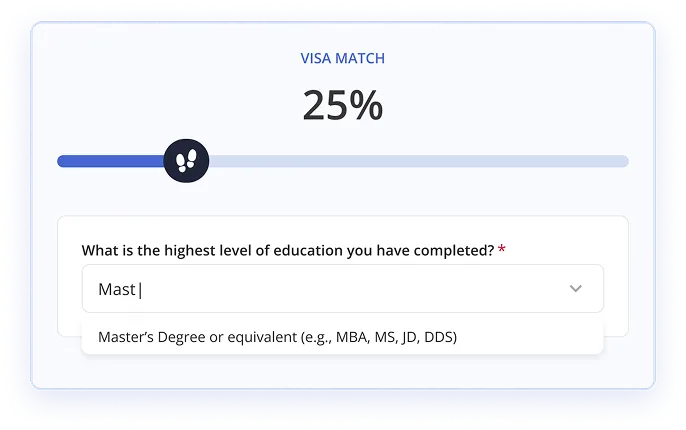
If you want a clearer, profile-based view of which visa may be a better fit right now, you can start with our Visa Match tool to assess your options. For a more detailed discussion around strategy, timing, and next steps, speaking directly with an immigration expert can help you plan with more confidence.
WE CAN HELP
Need more clarity?
Find quick answers to frequent visa questions from our legal experts
How long do I have to respond to an O-1A RFE?
USCIS typically gives up to 87 days to respond, and the exact deadline is printed on the RFE notice itself.
The deadline isn't extendable, so plan to submit a few days early to account for mail delivery or upload errors.
Can I get an O-1B without a U.S. employer?
You cannot self-petition, but you do not necessarily need a traditional employer. A U.S. agent can serve as the petitioner and file on your behalf, which is common for performers and artists who work for multiple employers or on a project basis.
Your own U.S. company can also petition for you.
Is self-petitioning harder than employer sponsorship?
It depends on your profile rather than being harder across the board. Self-petition removes the need to find a sponsoring employer and clears the PERM step, which simplifies the process. In exchange, the full burden of proof sits on you, so your evidence has to carry the petition without a company vouching for the role.
For a strong candidate the trade is often worth it; for a borderline record, a sponsored EB-2 or EB-3 can be the more reliable route.
What's the difference between O-1A and O-1B for content creators?
The O-1A covers extraordinary ability in business, science, education, or athletics, while the O-1B covers extraordinary achievement in the arts.
If your content creation is primarily creative, such as video production, photography, or music, the O-1B is likely the right fit. If you've built a business around content creation, like launching a product line, running an agency, or scaling a media company, the O-1A may be stronger.
The classification depends on the nature of the work you'll perform in the U.S.
Does winning smaller or regional awards help in an O-1/EB-1A case?
Yes, but they are generally weaker than major national or international awards. They can still support your profile when combined with stronger evidence. In most cases regional awards are not useful for the awards criteria but are still helpful to establish recognition in your field.
Other blogs for every step of your visa journey
Your immigration forms - what each one is for and what to check before you sign
9 mins read | Oct 13, 2026
How to write an RFE response letter and organize the evidence behind it
9 mins read | Oct 12, 2026
Laying off a sponsored employee on H-1B: what the company owes and what the employee has left
8 mins read | Oct 9, 2026