Form I-290B after a denial: motion to reopen, motion to reconsider, or appeal
9 mins read | Oct 16, 2026
FIND SPONSORING EMPLOYERS
Contributor
Tukki
Reading time
8 mins read
Date published
Jul 2, 2026
Visa sponsorship jobs are roles where a U.S. employer agrees to file an immigration petition so you can work in the country legally. Finding them takes more than a keyword search, because the right approach depends on which work visa fits your profile and whether the employer has sponsored foreign workers before. This guide covers where to look for jobs that offer visa sponsorship, how to read a posting for sponsorship language, and which visa types different roles tend to map to.
Sponsorship is common, and it reaches far beyond the H-1B that most job seekers hear about first. Employers sponsor foreign nationals through the H-1B, O-1, L-1, TN, and E-3, and each one fits a different kind of role and background. The more clearly you understand which route matches your situation, the more targeted your job search becomes and the easier it is to have a productive conversation with a hiring manager.
Visa sponsorship means a U.S. employer takes on the legal and financial role of petitioning for your work authorization, so you can accept the job and work lawfully. The employer becomes the petitioner, you become the beneficiary, and the petition is filed with U.S. Citizenship and Immigration Services (USCIS) or, for some visas, presented directly at a port of entry or consulate. Sponsorship is the mechanism that connects a job offer to legal permission to work.
The employer's obligations depend on the visa. For an H-1B specialty occupation, the company files a Labor Condition Application (LCA) with the Department of Labor, attesting that it will pay at least the prevailing wage for the role and location, then files Form I-129 with USCIS. Other visas skip the LCA entirely and rely on different evidence, which changes what the employer has to prepare and how long the process takes.
For a fuller breakdown of how the employer side works, our guide to what a visa sponsorship is walks through the petitioner and beneficiary roles in detail. The practical takeaway for a job seeker is that sponsorship is normal, but it asks something of the employer, so your job is to find companies willing and equipped to do it.
Several work visas allow employer sponsorship, and matching your profile to the right one is the single most useful thing you can do before applying. The most common employer-sponsored routes are the H-1B, O-1, L-1, TN, and E-3, each built for a different kind of candidate. The table below summarizes who each one fits, and the sections after it explain the nuances.
| Visa | Best fit for | Key requirement |
|---|---|---|
| H-1B | Professionals in specialty occupations | Bachelor's degree (or equivalent) in a related field, employer files LCA |
| O-1 | People with extraordinary ability or achievement | Sustained recognition and evidence in your field |
| L-1 | Employees transferring within a multinational company | One year of qualifying work abroad in the last three years |
| TN | Canadian and Mexican professionals in listed occupations | Citizenship of Canada or Mexico, a job in an approved profession |
| E-3 | Australian nationals in specialty occupations | Australian citizenship, a specialty occupation job offer |
The H-1B is the most common route for visa sponsorship jobs, and it covers roles classified as specialty occupations, meaning positions that require at least a U.S. bachelor's degree or its equivalent in a related field. Software engineers, data analysts, accountants, and many other degree-track professionals typically fit here. Your employer files the LCA, then submits Form I-129 to sponsor you.
The catch is the annual cap. Each fiscal year, U.S. immigration law limits new cap-subject H-1B visas to 85,000: 65,000 under the regular cap plus 20,000 reserved for candidates with a U.S. master's degree or higher. Because demand exceeds supply, USCIS runs a registration and random selection process, commonly called the H-1B lottery, during a window in March. Employers pay a registration fee per candidate to enter, and only selected registrations move on to a full petition.
Not every H-1B employer faces the cap. Cap-exempt employers can file at any time of year and skip the lottery entirely. These include institutions of higher education, nonprofit organizations affiliated with universities, nonprofit research organizations, and government research organizations. If a lottery-driven timeline worries you, targeting cap-exempt employers like universities and research institutes is a practical way to sidestep it. To find companies with a track record of H-1B filings, see our list of companies that sponsor H-1B visas.
The O-1, L-1, TN, and E-3 give you sponsored routes that don't run through the H-1B lottery, and each suits a specific profile. Knowing they exist widens your search well past the roles labeled "H-1B only."
The O-1 is for people who have reached the top of their field in sciences, business, education, athletics, or the arts, shown through a record of awards, publications, press, or other recognition. It has no annual cap and no lottery, and it allows sponsorship through a U.S. agent rather than a single payroll employer, which suits freelancers, consultants, and founders working across multiple projects. If you have a strong track record, an O-1 sponsor can file for you at any time.
The L-1 fits employees of multinational companies who transfer from a foreign office to a U.S. one. To qualify, you generally need at least one year of work with the company abroad in an executive, managerial, or specialized-knowledge role within the three years before the transfer. If you already work for a company with U.S. operations, an internal transfer can be the most direct sponsored path, since it relies on your existing employment rather than a new hire.
The TN, created under the trade agreement now known as the USMCA, is available to citizens of Canada and Mexico working in one of the professions on the agreement's approved list, such as engineers, accountants, scientists, and registered nurses. It needs a U.S. job offer in a listed occupation and proof you meet that profession's degree or license requirement, but there's no annual cap. Keep in mind the TN doesn't allow dual intent, so you must show you're coming to work temporarily. The E-3 works similarly for Australian nationals in specialty occupations: it mirrors the H-1B's degree and prevailing-wage standards but is reserved for citizens of Australia and has its own separate annual cap of 10,500.
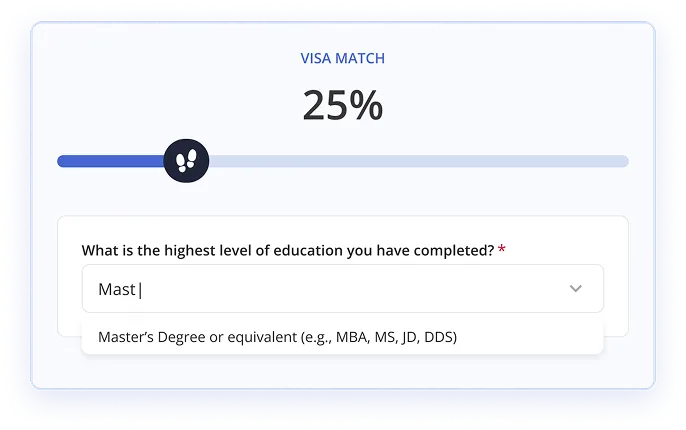
If you're weighing more than one of these, our overview of the types of U.S. work visas compares them side by side. You can also use the Visa Match tool below to see which routes fit your profile.
The best places to find U.S. jobs with visa sponsorship are employers with a documented history of sponsoring foreign workers, since a company that has done it before knows the process and is far more likely to do it again. Public data makes these employers easy to identify. The Department of Labor publishes LCA disclosure data listing every employer that filed for H-1B roles, including job titles, wages, and locations, which is a reliable starting point for building a target list of sponsoring employers.
Beyond government data, several job boards let you filter specifically for sponsorship. Some sites tag visa sponsorship jobs directly or list roles posted by known sponsors, and large employers in tech, finance, healthcare, engineering, and academia often state their sponsorship policy on their careers pages. Setting up alerts for "visa sponsorship" and specific visa names on general job boards also surfaces roles you'd otherwise miss.
Universities and research institutions deserve special attention because many are cap-exempt H-1B employers, so they can hire and file outside the March lottery. Hospitals, national labs, and nonprofit research centers fall into this group too. If your field connects to research or higher education, these institutions can offer both a real job and a smoother sponsorship timeline than a cap-subject company.
Networking still matters more than any board. Referrals move your application past the first filter, and a warm introduction gives you the chance to raise sponsorship early with someone who can advocate for you internally. Immigration attorneys and professional communities in your field often know which local employers sponsor, so those connections can point you toward companies that sponsor visas without you having to guess.
Reading a job posting for sponsorship language starts with looking for the phrases employers use to signal whether they'll sponsor, because they rarely say it plainly. The clearest positive sign is direct wording like "visa sponsorship available," "we sponsor work visas," or "open to H-1B candidates." When you see that, the employer has already decided sponsorship is on the table, and you can apply with confidence.
The harder cases are the postings that signal the opposite without naming it. Watch for these phrases, which usually mean sponsorship isn't offered:
A posting that stays silent on sponsorship is neither a yes nor a no. Plenty of employers simply don't address it in the listing, especially smaller companies that handle it case by case. Rather than rule those out, treat silence as a prompt to ask early, ideally before you invest hours in interviews. A short, direct question, such as whether the role is open to candidates who need work visa sponsorship, saves everyone time and shows you understand the process.
When you do raise it, frame sponsorship around the value you bring and the specific visa you'd need, not as an obstacle. An employer who hears "I qualify for TN status as a Canadian engineer, which is a fast and low-cost process" reacts differently than one who hears a vague request for help with immigration. Knowing your likely visa turns a scary unknown into a concrete, manageable step for the hiring team.
Different roles tend to map to specific visas, so identifying your likely category early helps you target the right jobs and speak the employer's language. The connection usually comes down to your degree, your background, your nationality, and the nature of the work, and most job seekers fit cleanly into one or two categories once they look at it this way.
Degree-track professional roles in fields like software, finance, engineering, and science most often map to the H-1B, since these are the specialty occupations the visa was built for. If you hold a relevant bachelor's or higher and the job requires that degree, the H-1B is usually the default sponsored route, with the lottery as the main hurdle. Candidates with standout records, though, may qualify for the O-1 instead, which avoids the cap entirely.
Leadership and specialized roles inside a multinational company point toward the L-1, especially if you already work for the organization abroad. Roles in one of the USMCA-listed professions map to the TN if you're a Canadian or Mexican citizen, and specialty occupation roles map to the E-3 if you're Australian. The same software engineering job could therefore be filled through an H-1B, a TN, or an E-3 depending on who's applying, which is exactly why knowing your own best-fit visa is so valuable.
Tukki is a U.S. immigration provider focused on employment-based visas, from H-1B specialty occupation roles and O-1 extraordinary ability cases to L-1 transfers and green cards, with dedicated attorney support and full case visibility at every step. If you're not sure which visa a job you want could support, we can help you figure it out before you apply.
WE CAN HELP
Need more clarity?
Find quick answers to frequent visa questions from our legal experts
Can a worker file Form I-129 on their own behalf?
No. Form I-129 must be filed by the U.S. employer acting as the petitioner.
The foreign national beneficiary cannot self-petition.
The employer is responsible for completing the form, paying the filing fees, and providing supporting documentation to USCIS.
How long can each L-1A visa extension last?
Each L-1A extension can be granted for up to two years at a time.
The total time you can spend in L-1A status is seven years, including your initial period and all extensions combined.
Time previously spent in H-1B status also counts against this seven-year cap.
What happens if you are not selected in the H-1B lottery?
If you're not selected, your employer's H-1B registration for that fiscal year is not chosen, and no petition can be filed.
Your current visa status isn't affected by the non-selection itself, but you'll need to maintain valid status through other means, such as OPT, another work visa, or a new H-1B registration the following year.
Alternatives include pursuing a cap-exempt H-1B, applying for an O-1A visa, or exploring an L-1 intracompany transfer.
Can I work for a nonprofit and a for-profit company at the same time?
Yes. If your first job is with a cap-exempt nonprofit and you want to add a concurrent role at a for-profit company, you can do so even if the annual H-1B cap has been reached.
Just remember that your eligibility for the cap-subject position depends on maintaining your cap-exempt employment.
Other blogs for every step of your visa journey
Form I-290B after a denial: motion to reopen, motion to reconsider, or appeal
9 mins read | Oct 16, 2026
EB-2 NIW approval rate: what the published numbers show and where cases fail
8 mins read | Oct 15, 2026
Form I-539: how to extend or change your status without leaving the U.S.
8 mins read | Oct 14, 2026