The 90 day rule in immigration - changing status after you enter on a B-1/B-2
9 mins read | Sep 15, 2026
WHERE YOUR EB-1 INDIA DATE SITS
Contributor
Tukki
Reading time
11 mins read
Date published
Jun 12, 2026
If you were born in India and you're weighing the EB-1A, the first thing you want to know is where the EB-1A priority date for India sits right now. The honest answer is that EB-1 for India is oversubscribed, so the category is not current: the final action date in this month's Visa Bulletin is retrogressed, which means a visa number is only available to people whose priority date falls before that cut-off. Your priority date is your place in line, and for EB-1A it's the day USCIS receives your Form I-140, the immigrant petition that starts an employment-based green card.
This guide explains how that date works for an Indian national, why EB-1 tends to move ahead of EB-2 and EB-3, and when EB-1A is the realistic faster route for your case (and when it isn't). Nobody can promise you a specific date when EB-1 India will become current, and anyone who does is guessing. What we can do is show you how to read the numbers yourself. For the broad processing-time picture across all of EB-1, our EB-1 processing time guide for India goes deeper.
The EB-1A priority date for India is not current, because EB-1 for India is oversubscribed and its final action date has retrogressed. Demand from Indian applicants for first-preference employment green cards is higher than the supply of visa numbers India receives each year, so the Department of State holds a cut-off date and only applicants whose priority date falls before it can move to the final green card step. If your I-140 receipt date is later than the posted date, you wait.
This reshapes what "approved" means for you. Getting your EB-1A petition approved by USCIS is a real milestone, but for an Indian national it doesn't hand you a green card the next day. Approval confirms you qualify as a person of extraordinary ability, while the priority date controls when a visa number frees up: two separate gates you clear in order.
The final action date is the date in the monthly Visa Bulletin when a green card can actually be issued or your adjustment of status can be approved. The Department of State publishes the bulletin every month with two charts, final action dates and dates for filing, and the final action date is the one that governs the green card itself. For EB-1 India, you read across to the EB-1 row, down to the India column, and compare the listed date against your own priority date.
The rule is simple: if your priority date is earlier than the EB-1 India final action date, your category is current and a visa number is available, and if it's later, you wait until the bulletin advances past it. Because the date shifts every month, sometimes forward and occasionally backward, you check it monthly rather than treating any single reading as permanent. We walk through both charts step by step in our guide on how to read the Visa Bulletin.
No, EB-1A is not current for India as long as the EB-1 final action date for India stays retrogressed, which is the situation in the current Visa Bulletin. EB-1A doesn't get its own line in the bulletin: it sits inside the broader EB-1 first-preference category alongside EB-1B (outstanding researchers and professors) and EB-1C (multinational managers and executives), so the "EB-1" cut-off in the India column applies to your EB-1A case too.
The queue exists because of the per-country limit, a cap that prevents any single country of birth from taking more than a set share of the green cards available in a category each year. India produces far more qualified applicants than that share allows, so a queue forms. That queue is shorter for EB-1 than for EB-2 or EB-3, which is exactly why so many Indian applicants look at EB-1A in the first place.
No one can tell you the exact month EB-1A will become current for India, and you should be cautious about any source that names a specific date. The Visa Bulletin moves on demand, supply, and how the Department of State manages visa numbers across the year, and those inputs change. What you can do is understand the forces that push the EB-1 India date forward or backward, then track it yourself so your planning rests on real numbers instead of a prediction.
The EB-1 India final action date moves on a handful of factors that interact in ways no forecast can pin down. The biggest is how many Indian applicants already hold approved or pending EB-1 petitions ahead of you, since that backlog has to clear before later priority dates become current. On top of that sits the annual supply of visa numbers, which depends on the worldwide employment-based limit set by law, India's per-country share, and any unused numbers that spill over from other categories. Demand swings too: when EB-2 and EB-3 waits grow long enough to push more Indian professionals into EB-1, the date moves more slowly, and the Department of State paces it deliberately so the category doesn't use up its numbers too early. That's why you sometimes see it hold steady, jump forward, or retrogress, and why the responsible move is to read the trend over several months rather than bet on a single forecast.
You track the EB-1 India date by reading the Visa Bulletin the same way every month and comparing the new EB-1 India final action date against your own priority date, your I-140 receipt date. The Department of State posts the next month's bulletin in the middle of each month, so check it then and record how far the EB-1 India date moved. Over three to six months that record tells you whether the date is advancing steadily, crawling, or stuck, which is far more useful than any single snapshot, and it helps you time decisions like whether to add premium processing or when to gather your adjustment-of-status documents. You can pull the live numbers from the Department of State Visa Bulletin directly.
Infographic spec, EB-1 vs EB-2 vs EB-3 priority date snapshot for India. A clean three-row visual comparing where EB-1, EB-2, and EB-3 sit for India in the current month's Visa Bulletin final action dates, with EB-1 shown furthest ahead. Pull the live dates at production time, do not hardcode them. Caption: "Final action dates for India move every month. Always check the current Visa Bulletin." Link the caption to /blog/how-to-read-visa-bulletin.
Indian nationals turn to EB-1A because it sits in the first-preference category with the shortest employment-based queue for India, even though that queue is still backlogged. For someone who has watched an EB-2 or EB-3 priority date inch forward year after year, EB-1 has historically moved further and faster for India, since it's the highest-priority employment-based green card and carries its own slice of the annual visa numbers. The appeal is practical: many applicants in the EB-2 or EB-3 line already have the kind of record, senior technical roles, published work, patents, leadership at well-known companies, that can support an extraordinary-ability case, so EB-1A becomes a question worth asking while they keep their current green card in progress.
The EB-2 and EB-3 backlog for India is severe, with final action dates that sit many years behind the present and advance slowly because demand from Indian applicants so far outstrips the per-country supply. EB-2 covers professionals with advanced degrees or exceptional ability and EB-3 covers skilled workers and professionals, and both require an employer and, in most cases, PERM labor certification, the recruitment-based process run through the Department of Labor that tests the U.S. job market and adds time before the I-140 is even filed.
Combine a long pre-petition process with a deeply retrogressed final action date, and an EB-2 or EB-3 green card can stretch across many years. For many people it remains the realistic route, especially with a committed employer; the wait is simply long, which is what sends applicants looking at whether EB-1 moves faster. To compare the two lower categories first, our breakdown of choosing between PERM EB-2 or EB-3 covers how that choice plays out.
In the same Visa Bulletin, EB-1 for India typically carries a final action date ahead of EB-2 and EB-3 for India, even when all three are retrogressed, and that gap is the whole reason the comparison matters. As the first preference, EB-1 draws from a larger, higher-priority pool of visa numbers and has historically cleared its India queue faster, so an applicant whose EB-2 date is far out might find that an EB-1A priority date would place them in a meaningfully shorter line. Being ahead is not the same as being current, though, and the gap narrows or widens month to month, so treat the comparison as a reason to check whether you qualify for EB-1A rather than a guarantee of a quick green card.
EB-1A is the first-preference employment-based green card for individuals with extraordinary ability in the sciences, arts, education, business, or athletics. It asks for sustained national or international acclaim and a record that puts you among the small percentage at the top of your field. You don't need a Nobel Prize, but you do need documented, recognized accomplishment that an experienced reviewer can tie into a clear story of standing out.
This post focuses on the India backlog and the priority-date question, so the goal here is to help you decide whether EB-1A is worth exploring from where you stand, not to coach you through filing. For the full eligibility breakdown and the two-step USCIS review, our EB-1A visa guide is the pillar resource to read alongside it.
The reason EB-1A is worth a look from inside the EB-2 or EB-3 line is that it's a self-petition: you file Form I-140 for yourself, without an employer, a job offer, or PERM labor certification. Where EB-2 and EB-3 usually depend on your employer running PERM and sponsoring you across a multi-year wait, a self-petitioned EB-1A travels with you. If you change jobs, get laid off, or start a company, an employer-tied case can be disrupted, while your own petition stays yours.
A fast way to gauge whether EB-1A is even worth exploring is to look at the criteria USCIS uses to spot extraordinary ability. You either show one major internationally recognized award, or you meet at least 3 of these 10:
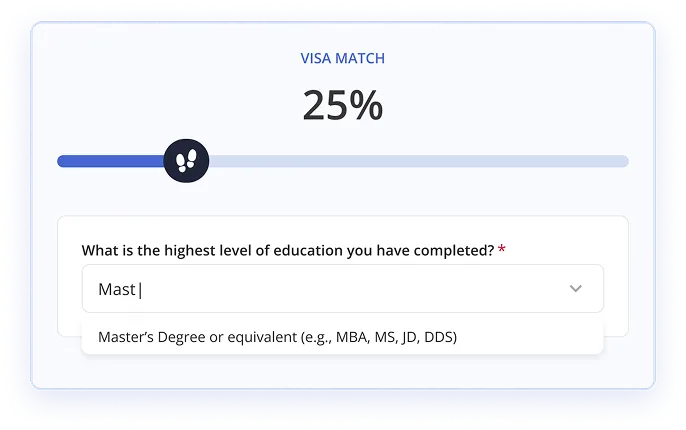
Many Indian professionals in the EB-2 or EB-3 queue already touch several of these through senior roles at well-known firms, patents, conference talks, peer reviewing, or published research. Treat this as a gut-check rather than a green light: touching a few criteria is not the same as clearing the bar, and whether your record actually rises to extraordinary ability is a judgment call best made against your specific profile. The most useful next step is a clear read on which route fits you, which is what our visa match tool is built for.
Infographic spec, "Do you have an EB-1A case?" self-check. A self-assessment checklist listing the 10 criteria as checkable items, with "Meet at least 3" called out prominently at the top, framed as a gut-check rather than a verdict. Keep it descriptive and self-serve so a reader can tally their own profile, with the closing line pointing to the /visa-match tool to see which route actually fits.
EB-1A is the faster route for an Indian applicant when their EB-1 priority date would land ahead of where their EB-2 or EB-3 date sits, and when their record genuinely supports an extraordinary-ability case. Those two conditions go together: the priority-date advantage only helps if you can actually qualify, and qualifying only matters if EB-1 is meaningfully ahead of your current category for India. When both line up, filing EB-1A can move you into a shorter line and let you self-petition without an employer or PERM.
In other situations it may not save time. If your achievements don't yet reach the extraordinary-ability bar, forcing an EB-1A filing risks a denial or a Request for Evidence (an RFE, where USCIS asks for more proof before deciding) rather than a quicker green card. If you already hold an early EB-2 or EB-3 priority date that's close to current, switching may save little. And if your case is strong but borderline, building your record for another year before filing can produce a better outcome. The realistic call depends on your evidence and your existing place in line, and it stays yours to make. For the full timeline math, see our EB-1 processing time guide for India.
One detail makes the math more favorable than many applicants expect: if you already have an approved I-140 from an earlier EB-2 or EB-3 case, you generally keep that original priority date and can carry it onto a new EB-1A petition. So a long-pending EB-2 or EB-3 date earned through PERM doesn't disappear when you self-petition for EB-1A; it transfers to the EB-1 category, which means you move into the shorter EB-1 line while holding the place you've already earned in the queue. This priority-date retention is one of the strongest reasons a backlogged Indian applicant with an older approved petition looks at EB-1A in the first place.
EB-1A is one route, not the only one, and the honest move for a backlogged Indian applicant is to weigh it against the alternatives that fit the same profile rather than to assume EB-1A is the answer. The two that most often sit alongside it are EB-2 NIW, another self-petition green card, and O-1A, a temporary work visa for extraordinary ability.
EB-2 NIW, the National Interest Waiver, lets you self-petition under EB-2 by showing your work has substantial merit and national importance, that you're well positioned to advance it, and that it benefits the U.S. to waive the usual job-offer and PERM requirements. Like EB-1A, it needs no employer and no labor certification. For India, though, the line matters more than the form: EB-2 NIW still falls under EB-2, so it sits in the same heavily retrogressed EB-2 India queue, while EB-1A sits in the shorter EB-1 line. NIW can be easier to qualify for, since its standard is national importance rather than top-of-field acclaim, but it usually doesn't shorten the India wait the way a successful EB-1A move can. If NIW looks like the better fit, our guide on how to apply for an EB-2 NIW covers the three-part Dhanasar test (the 2016 framework USCIS uses for NIW) in full.
| EB-1A | EB-2 NIW | |
|---|---|---|
| Category line for India | EB-1 (shorter, still backlogged) | EB-2 (longer, heavily backlogged) |
| Standard to qualify | Extraordinary ability, top of field | Substantial merit and national importance |
| Self-petition (no employer) | Yes | Yes |
| PERM labor certification | Not required | Not required |
| Priority date | Date USCIS receives the I-140 | Date USCIS receives the I-140 |
O-1A is worth knowing about for a different reason. It's a temporary visa rather than a green card, so it carries no priority date and no Visa Bulletin wait, which means a qualifying applicant can live and work in the U.S. now while a green card case runs in the background. The bar overlaps heavily with EB-1A, so it can be a way to be in the country sooner if your record is strong but the green card line is long. Our comparison of EB-1A vs O-1A lays out where the two diverge. Which of these three actually fits depends on your record, your timeline, and the line you're already in, which is exactly what the visa match tool is designed to sort out.
If EB-1A turns out to fit, the mechanics are straightforward, and they're worth knowing so the path feels concrete rather than mysterious. You can apply from India, since EB-1A is a self-petition and doesn't require you to be inside the United States to file. You file Form I-140 with USCIS, the base filing fee is $715, and the day USCIS receives that petition becomes your priority date, your place in the EB-1 India line.
A few things follow from the backlog. Premium processing is available on the I-140 for $2,965 and commits USCIS to act within 15 business days, a fee and timeline that took effect March 1, 2026, but it speeds up only the petition decision, not the priority-date wait, which the Visa Bulletin governs entirely. And for most Indian nationals the backlog means you can't file Form I-485 at the same time as the I-140 (concurrent filing is only possible when a visa number is immediately available), so the realistic sequence is to win the I-140, wait for your EB-1 India priority date to become current, then finish through adjustment of status if you're in the U.S. or consular processing abroad. Our Form I-140 guide covers the petition itself.
The point of all this is not to talk you into filing. It's to give you an honest read on where you'd stand so you can choose well. If you're weighing EB-1A against the EB-2 or EB-3 line you're already in, or against EB-2 NIW or O-1A, start by seeing which routes actually match your profile.
Tukki is a U.S. immigration provider that helps people figure out which work visa or green card route fits their situation and then supports the one they choose, with dedicated attorney access and a clear view of the case at every step. For an Indian national stuck in the EB-2 or EB-3 line, that starts with an honest read of your options, not a rush to file.
WE CAN HELP
Need more clarity?
Find quick answers to frequent visa questions from our legal experts
Is it possible to re-apply to the USCIS if your application to the O-1A or EB-1A visas is rejected?
Yes, you can reapply as many times as you wish.
However, bear in mind that when you submit a green card petition or it’s submitted on your behalf, immigration authorities may sometimes see this as an indication that you plan to live in the US permanently (immigrant intent). This is incompatible with a key requirement for most temporary visas, which must express an intent to relocate to the US temporarily only.
If you plan to, or need to file a temporary visa application after filing an EB-1A application, this may affect your eligibility to renew or obtain your temporary visa.
Rules around resubmissions are nuanced, so it is advisable to consult with an experienced immigration attorney to understand all the implications.
Which work visas lead directly to a green card?
The immigrant categories, EB-1A, EB-1C, EB-2 NIW, and EB-2 or EB-3 through PERM, lead directly to a green card. The temporary work visas don't grant permanent residence on their own, but several act as bridges.
An H-1B holder can move through PERM to EB-2 or EB-3, an L-1A manager to the EB-1C, and an O-1A performer to the EB-1A.
Is it worth filing EB-1 with the India backlog when EB-2 also has a backlog?
Yes. The EB-1 India backlog of 2 to 3 years is far shorter than the EB-2 India backlog of 10+ years.
For qualified applicants, the EB-1 is the fastest employment-based path to a green card by a significant margin.
What's the difference between EB-1A and EB-1B?
The EB-1A is for individuals with extraordinary ability across sciences, arts, education, business, or athletics, and allows self-petitioning. The EB-1B is specifically for outstanding professors and researchers and requires employer sponsorship.
The EB-1A has 10 criteria (meet 3), while the EB-1B has its own set of requirements focused on academic and research achievements. The EB-1A is generally more flexible because it doesn't require an employer.
Other blogs for every step of your visa journey
The 90 day rule in immigration - changing status after you enter on a B-1/B-2
9 mins read | Sep 15, 2026
O-1 visa checklist - the evidence to start saving a year before you file
9 mins read | Sep 14, 2026
How to choose an immigration lawyer - law firm, boutique, or managed service
9 mins read | Sep 11, 2026