You have a valid visa and an EAD at the same time - which one you work on and why it matters
8 mins read | Oct 6, 2026
VISA INTERVIEW RISK FACTORS
Contributor
Tukki
Reading time
8 mins read
Date published
Apr 1, 2026
Getting worried while preparing for a U.S. visa interview is totally normal, specially if there's something in your immigration history that's making you nervous. Visa interview risk factors like prior overstays, criminal records, and past denials are more common than most applicants realize, and the anxiety of not knowing how bad the situation actually is can be worse than the issue itself. The good news: many of these problems are manageable when you understand exactly what the consular officer will see and how U.S. immigration law treats each one.
Below, we'll go through the most common reasons for visa denial tied to your personal history, the real-world consequences of each, and where waivers or workarounds exist. Some of these visa red flags can be resolved before you ever walk into the consulate. Others can't, and knowing the difference changes how you prepare.
The legal foundation for most visa denials sits in INA Section 212(a), which lists the grounds of inadmissibility. These include health-related issues, criminal history, security concerns, public charge findings, and immigration violations. When a consular officer reviews your visa application, they have access to extensive government databases (including TECS, CLASS, and IDENT) that contain records of your prior entries, exits, visa history, and any law enforcement encounters in the United States.
Not every risk factor carries the same weight. A two-week overstay on a tourist visa and a controlled substance conviction are in completely different categories. The key is understanding which factors trigger automatic bars, which ones are discretionary, and which ones have waivers available. That distinction shapes everything about how you should prepare.
Prior overstays are the single most common visa interview risk factor, and the consequences depend entirely on how long you stayed past your authorized date. Your I-94 arrival/departure record shows exactly when your legal status expired, and USCIS tracks this closely.
Here's the breakdown that matters. If you overstayed by a few days or weeks but left voluntarily before accumulating 180 days of unlawful presence, you won't trigger a statutory bar. The consular officer may still ask about it, and it could count against you in a discretionary decision, but it doesn't automatically block your visa application.
Once you cross the 180-day threshold, the penalties escalate fast. An overstay between 180 days and one year triggers a 3-year bar from reentering the U.S. after you depart. Accumulate one year or more of unlawful presence, and that bar jumps to 10 years. These bars only activate once you leave the country, which is why some people stay rather than depart, but that creates its own set of problems.
The worst-case scenario involves the permanent bar: if you accrued more than one year of unlawful presence, departed, and then reentered or attempted to reenter the U.S. illegally, you face a permanent bar with only a limited waiver possibility after 10 years outside the country.
| Unlawful presence | Consequence after departure |
|---|---|
| Under 180 days | No automatic bar (discretionary risk remains) |
| 180 days to 1 year | 3-year bar from reentry |
| 1 year or more | 10-year bar from reentry |
| 1+ year, departed, then illegal reentry | Permanent bar (limited waiver after 10 years) |
So can you get a visa with an overstay? It depends on duration. A short overstay with a reasonable explanation is very different from months of unlawful presence that triggers a statutory bar.
Lying on a visa application is one of the fastest ways to permanently destroy your chances of entering the United States. Under INA 212(a)(6)(C)(i), any material misrepresentation, meaning a lie or false document that could have influenced the visa decision, results in a finding of permanent inadmissibility.
This catches more people than you'd expect. Common examples include claiming to be single when you're married, inflating your income or employment history, hiding a previous visa denial from a different country, or using someone else's documents. Even well-intentioned "white lies" that seem minor at the time can trigger this finding. A consular officer who discovers you misrepresented something on a prior application won't just deny the current one. They'll flag your record with a permanent inadmissibility finding that follows you to every future application.
The I-601 waiver (Application for Waiver of Grounds of Inadmissibility) exists for misrepresentation cases, but it requires proving that your denial would cause extreme hardship to a qualifying U.S. citizen or lawful permanent resident relative. That's a high standard, and not everyone qualifies.
The bottom line: if your prior application contained inaccurate information, disclosing it proactively is almost always better than hoping the consular officer won't notice. They have access to your full application history.
Criminal history is one of the most anxiety-inducing visa red flags, but the impact varies enormously depending on the type and severity of the offense. Not all criminal records are equal in the eyes of U.S. immigration law.
The most serious category involves crimes involving moral turpitude (CIMT), a legal term that covers offenses involving fraud, theft, or conduct that shocks the public conscience. A single CIMT conviction can make you inadmissible, though a petty offense exception exists for crimes with a maximum sentence of one year or less where the actual sentence was six months or less.
Controlled substance violations are treated even more harshly. Any conviction related to drugs, with the exception of a single offense involving 30 grams or less of marijuana, generally makes you inadmissible with very limited waiver options. Multiple criminal convictions totaling five years or more of aggregate sentences also trigger inadmissibility regardless of the type of crime.
Here's what catches people off guard: the consular officer will ask about arrests, not just convictions. Even if charges were dropped or you were acquitted, you may need to disclose the arrest and provide court documentation showing the outcome. Trying to hide an arrest that shows up in U.S. databases converts a potentially manageable situation into a misrepresentation finding.
DUI offenses fall into a gray area. A single DUI typically isn't classified as a CIMT, but multiple DUIs, a DUI with injury, or a DUI combined with other factors can raise red flags. The consular officer has discretion here, and how you present the situation matters.
Having a previous visa denial on your record doesn't automatically disqualify you from future applications, but it creates an additional hurdle that many applicants underestimate. Every denial is recorded in your file, and the consular officer reviewing your new application will see it.
Simply reapplying with the same profile rarely works. U.S. immigration law operates on a presumption that the previous denial was correct, so the burden falls on you to demonstrate "changed circumstances" since the last decision. Changed circumstances means something material is different: you got a new job, your financial situation improved, your ties to your home country strengthened, or the reason for the original denial no longer applies.
If your prior denial was based on Section 214(b), the most common refusal for nonimmigrant visa applicants, it means the officer wasn't convinced you'd return home after your visit. Overcoming that requires concrete evidence of stronger ties, not just a letter saying you promise to come back. For applicants who've received multiple denials, working with an immigration attorney before refiling can make the difference between another rejection and an approval.
A deportation or removal order carries the heaviest bars in U.S. immigration law. The penalties scale based on the circumstances of the removal.
A standard removal order triggers a 5-year bar from reentry. If the removal followed unlawful presence or certain criminal grounds, that bar extends to 10 years. A second or subsequent removal carries a 20-year bar. In some cases, particularly those involving aggravated felonies, the bar is permanent. The U.S. Department of State provides additional information on how ineligibility findings affect visa processing.
Voluntary departure matters here. If you left the U.S. under a voluntary departure order (where an immigration judge allowed you to leave on your own rather than being formally removed), the consequences are significantly less severe than a formal removal. Voluntary departure generally doesn't trigger the same reentry bars, though it still appears in your immigration record.
The I-212 waiver (Permission to Reapply for Admission After Deportation or Removal) can allow someone to apply for a visa before their bar period expires, but approval isn't guaranteed and the process requires showing that you merit a favorable exercise of discretion. This is one area where consulting an immigration attorney isn't optional.
Beyond overstays and criminal issues, other immigration violations can affect your visa application in ways that aren't always obvious. Working without authorization, such as taking employment on a tourist visa or exceeding the terms of a student visa, creates a record that USCIS and CBP can see. Dropping out of school while on a student visa, failing to maintain your immigration status, or engaging in unauthorized employment all count as violations that consular officers take seriously.
These violations may not trigger the same statutory bars as unlawful presence, but they factor into the discretionary side of the visa decision. A consular officer who sees a pattern of status violations is less likely to believe you'll comply with the terms of a new visa. For applicants on nonimmigrant visas who've had status issues, understanding your I-94 record and what it shows is a good starting point for assessing your situation.
If you have a risk factor in your history, the worst thing you can do is try to hide it. Consular officers have access to databases that track your entries, exits, visa applications, arrests, and immigration court proceedings. Attempting to conceal information that the officer can easily verify doesn't just fail to help your case. It actively makes things worse by adding a potential misrepresentation finding on top of whatever the original issue was.
Think of it this way: a prior overstay with an honest explanation is a problem with possible solutions. A prior overstay that you lied about on your application is two problems, and the second one (misrepresentation) can be permanent. Where waivers exist for the underlying issue, they typically require a showing of good faith and full disclosure. An applicant who proactively addresses their history and provides documentation to explain it demonstrates the kind of credibility that consular officers respect.
For some risk factors, particularly those involving criminal history or complex unlawful presence calculations, getting a legal assessment before your interview is the smartest investment you can make. An immigration lawyer can review your record, identify exactly which grounds of inadmissibility apply, determine whether a waiver is available, and help you prepare the documentation that gives you the best chance of approval.
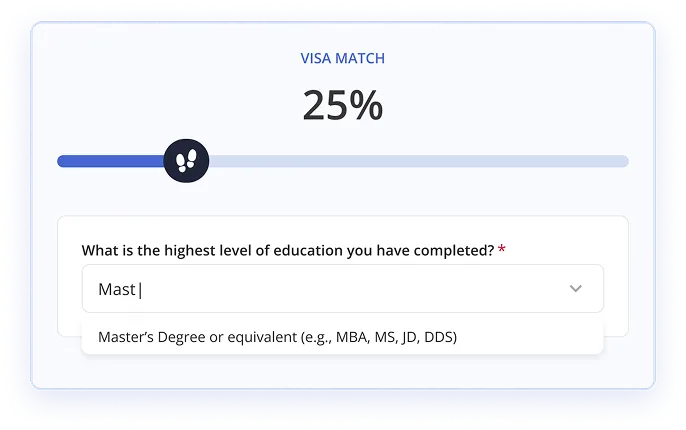
If you're still figuring out which visa type fits your situation, the Visa Match tool can help you compare options based on your profile.
Tukki is a U.S. immigration services provider that helps foreign nationals and their employers with work visas and green cards, from H-1B and O-1A to EB-1A and EB-2 NIW, with dedicated attorney support and full case visibility through every step of the process.
WE CAN HELP
Need more clarity?
Find quick answers to frequent visa questions from our legal experts
Can I switch from consular processing to adjustment of status or vice versa?
Yes, in many cases you can switch. If you chose consular processing but later enter the U.S. in valid status, you may be able to file Form I-485 to switch to AOS. Going from AOS to CP is also possible by withdrawing your I-485 and requesting consular processing through the NVC.
However, switching adds time and complexity to your case, so it's better to choose the right path from the start when possible.
Does this settlement change the PERM recruitment requirements?
No. The PERM recruitment requirements in 20 CFR § 656.17, the advertising content rules in § 656.17(f) and the recruitment report requirement in § 656.17(g) are unchanged. The settlement binds OpenAI and Statsig for three years and sets out what those two companies must do.
It is useful to other employers as a statement of how IER reads existing law, not as a new rule.
Does an O-1A visa RFE mean my petition will be denied?
No. An RFE means the officer wants more evidence before making a decision, not that the petition is failing.
Most well-prepared RFE responses result in approval, especially when the response directly addresses the officer's specific concerns and includes new evidence rather than just reargument of what was already submitted.
Can I file Form I-485 concurrently with Form I-140?
Yes, if your priority date is current when you file. Concurrent filing can save months and lets you apply for an EAD and Advance Parole at the same time.
If your priority date is not current, you'll have to wait for the Visa Bulletin before submitting Form I-485.
I'm a designer, is that O-1A or O-1B?
It depends on what your recognition is built on, since a designer can qualify for either. If you're known for the artistic merit of your work through exhibitions, design awards, and media coverage, the O-1B (arts) is the natural fit. If you're recognized for leading product teams, shaping widely used products, and earning a top-percentile salary, an O-1A business case can be stronger.
Choose the track your documented evidence supports best, then frame the petition around it.
Other blogs for every step of your visa journey
You have a valid visa and an EAD at the same time - which one you work on and why it matters
8 mins read | Oct 6, 2026
J-1 Research Scholar, Specialist and Trainee - the three categories employers use
8 mins read | Oct 5, 2026
RFE or NOID - what a notice of intent to deny means for your case
9 mins read | Oct 2, 2026