Your immigration forms - what each one is for and what to check before you sign
9 mins read | Oct 13, 2026
PREMIUM PROCESSING, STANDARD TIMELINES, AND WHAT TO EXPECT AT EACH STAGE
Contributor
Tukki
Reading time
7 mins read
Date published
Jan 28, 2026
The O-1A visa processing time varies depending on the type of processing you chose: premium or standard . With premium processing, USCIS guarantees a response on your I-129 petition (the form used to request O-1A status) within 15 business days. On the other hand, standard processing can take several months depending on the USCIS service center and current backlogs.
This guide breaks down O-1A processing times at each stage, explains premium versus standard processing, and covers what happens after USCIS approves your case.
The total timeline of your O-1A visa depends on the processing speed you choose, but there are several factors you must consider in the overall processing time for your O-1A.
A formal O-1A petition begins when a U.S. employer or authorized agent files the Form I-129 with USCIS on behalf of the beneficiary (that'd be you.)
For O-1A cases, the petition must already include all the evidence demonstrating extraordinary ability. You can double-check all the documents your O-1A petition needs here to make sure you present a strong case.
Be aware that, the I-129 petition is only one part of the overall timeline. If you are outside the United States, you will also need to schedule and attend a consular interview after USCIS approves your petition. Depending on the embassy, this can add anywhere from two weeks to several months. If you are already in the U.S. and request a change of status, the path is often faster because you can begin working as soon as your petition is approved.
When you file your O-1A petition (Form I-129), you choose between premium processing or standard processing. This decision impacts how long you’ll have to wait for USCIS initial decision (which may not be an approval necessarily.)
| Processing type | Timeline | Cost | Outcome |
|---|---|---|---|
| Premium processing | 15 business days | $2,805* | USCIS approves, denies, or issues RFE |
| Standard processing | Up to 6 months | No additional fee | Same outcomes, longer wait |
*Note: The premium processing fee is currently $2,805 and will increase to $2,965 effective March 1, 2026, following a recent USCIS fee revision. You can find the most recent fee schedule on the official USCIS website.
For O-1A applicants, premium processing is popular because the visa doesn’t have an annual cap. You can file at any time, and a quick decision helps you plan your move or start work sooner. Make sure to evaluate wether the EB-1A or the O-1A visa is the best fit for you before moving forward with your application.
To request premium processing for an O-1A visa application, your petitioner must file Form I-907 alongside the mandatory I-129 petition. You can also submit it later to upgrade a pending case.
Like we said previously, once USCIS receives the premium processing request, they are required to take action within 15 business days. If USCIS issues an RFE, the premium clock pauses until you respond, then restarts when USCIS receives your response.
In practice, USCIS generally meets the premium processing deadline. If they do not act within the 15-business-day window, you can request a refund of the premium processing fee.
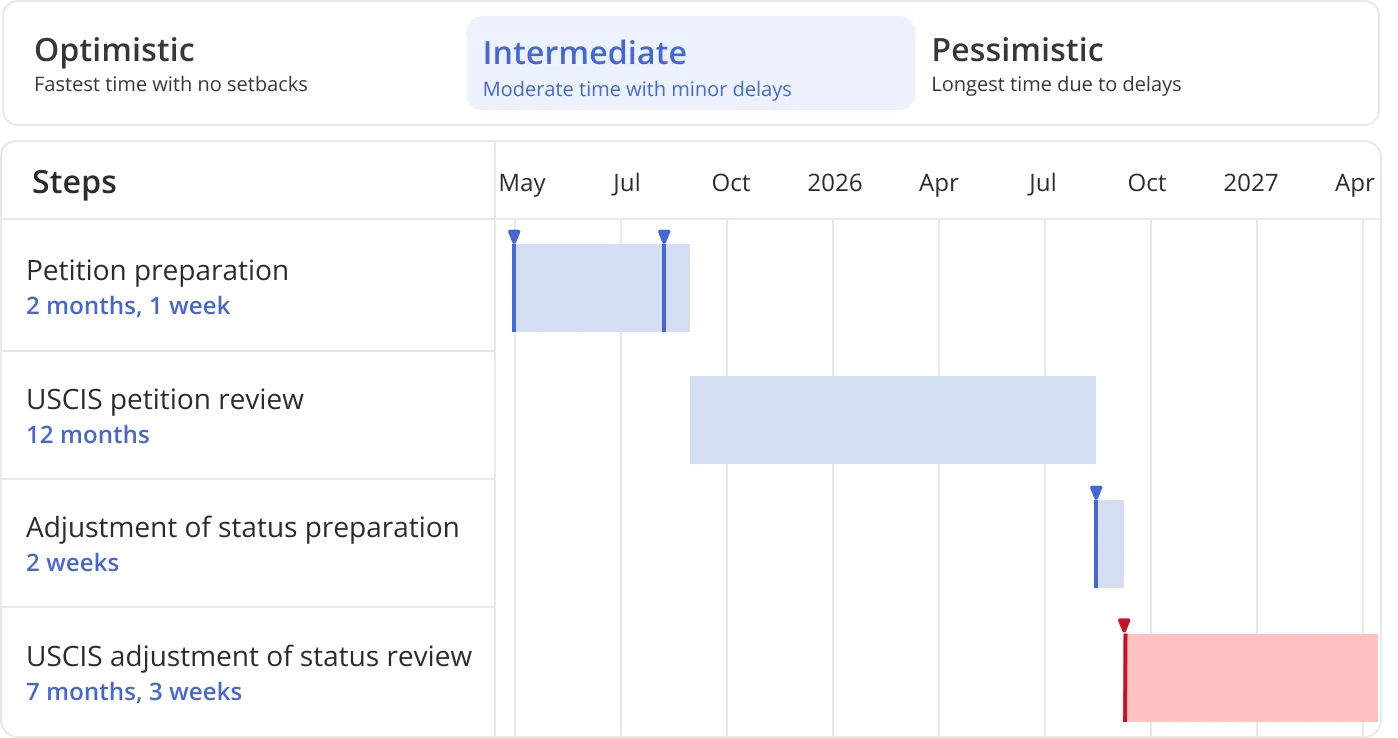
You can calculate how long your O-1A visa petition might take with Tukki's timeline and pricing calculator. Just select the choices that best fit your profile and you'll be ready to go!
A Request for Evidence (RFE) does not mean your visa has been denied. It simply means the USCIS officer evaluating your case requires more information or documentation before making a final decision.
When USCIS issues an RFE, they specify what evidence they need and give you a deadline to respond (the draft notes typically 87 days, though it can vary). It's very important that you respond by the deadline specified by the USCIS. If you miss it, chances are your petition will be denied based on the evidence already on file.
Some common reasons for O-1A RFEs include:
After you respond to the RFE, USCIS reviews the case again. If you chose premium processing, the 15-business-day clock will restart the moment USCIS receives your response. Without premium processing, there's no specific deadline for a post-RFE decision to your O-1A application.
After approval, the next step depends on where you are and whether you need a visa stamp.
If you’re in the U.S. on another valid status, the petitioner can request a change of status in the I-129. If approved, you can start working on the petition start date.
This usually does not add time beyond I-129 processing. With premium processing, work can begin within a few weeks.
But change of status does not provide an O-1 visa stamp. If you travel internationally, you’ll need a consular appointment and stamp to return.
If you’re outside the U.S. (or want the visa stamp first), the timeline includes:
This stage is the biggest timing variable. Appointment wait times vary widely by consulate and can be weeks or several months.
USCIS acts within about 15 to 20 business days, and you can start working as soon as the petition is approved.
Typical total timeline: about 2 to 4 weeks from filing to work authorization.
USCIS acts within about 15 to 20 business days, then you attend a consular interview. Depending on the embassy, this adds about 2 weeks to 3+ months.
Typical total timeline: about 1 to 4 months.
USCIS adjudication may take about 3 to 8+ months, plus time for the consular interview.
Typical total timeline: about 4 to 12+ months.
Several factors can influence your O-1A timeline beyond premium versus standard processing.
WE CAN HELP
Need more clarity?
Find quick answers to frequent visa questions from our legal experts
Can I switch from a P-3 visa to an O-1B later?
Yes, and it is a common path. Artists file P-3 petitions while their record is building, accumulate reviews, distinguished engagements, and expert recognition through their U.S. work, and file an O-1B once the criteria are met.
What's the difference between O-1A and O-1B for content creators?
The O-1A covers extraordinary ability in business, science, education, or athletics, while the O-1B covers extraordinary achievement in the arts.
If your content creation is primarily creative, such as video production, photography, or music, the O-1B is likely the right fit. If you've built a business around content creation, like launching a product line, running an agency, or scaling a media company, the O-1A may be stronger.
The classification depends on the nature of the work you'll perform in the U.S.
How many reference letters do I need for an O-1A?
Most strong O-1A petitions include 6 to 10 letters. The exact count matters less than the mix: aim for 3-4 independent experts, 2-3 senior leaders or supervisors, and 1-2 close collaborators.
A package of 6 well-targeted letters consistently outperforms 12 generic ones.
What are the most common O-1 visa denial reasons?
Press that never names the beneficiary, membership in bodies that don't screen on achievement, judging invitations with no completed evaluation, salary or equity figures with no reliable valuation or comparison group, reference letters that praise without explaining, and contributions nobody outside the beneficiary's own organization has adopted.
Other blogs for every step of your visa journey
Your immigration forms - what each one is for and what to check before you sign
9 mins read | Oct 13, 2026
How to write an RFE response letter and organize the evidence behind it
9 mins read | Oct 12, 2026
Laying off a sponsored employee on H-1B: what the company owes and what the employee has left
8 mins read | Oct 9, 2026