You have a valid visa and an EAD at the same time - which one you work on and why it matters
8 mins read | Oct 6, 2026
HOW DIGITAL CREATORS CAN PROVE EXTRAORDINARY ABILITY FOR A U.S. WORK VISA
Contributor
Tukki
Reading time
6 mins read
Date published
Mar 18, 2026
If you're an influencer or content creator looking to work in the United States, the O-1 visa for influencers is one of the most accessible paths available. The O-1 is a nonimmigrant visa for individuals with extraordinary ability or achievement, and it has no annual cap, no lottery, no degree requirement, and no minimum salary. You don't need a traditional employer to sponsor you either: an agent can file on your behalf, allowing you to work across multiple brands, platforms, and projects. The catch is that you need to prove your work rises above the rest of your field, and USCIS (United States Citizenship and Immigration Services) evaluates that through a specific set of criteria.
Many creators assume the O-1 is reserved for Grammy winners or Hollywood directors. It's not. If you've built a real audience, landed brand deals, spoken at industry events, or been featured in major publications, you likely have more qualifying evidence than you think. This guide explains the O-1A vs O-1B distinction for creators, walks through the criteria with examples from the creator economy, and covers how to build a petition that USCIS takes seriously.
The first decision in any O-1 visa application for content creators is choosing between the O-1A and the O-1B. They cover different categories and use different criteria, so the right classification depends on the nature of your work.
The O-1B visa covers extraordinary achievement in the arts, motion pictures, or television. If your work is primarily creative, such as producing original video content, photography, music, or visual storytelling, the O-1B is likely your strongest fit. You need to meet at least 3 out of 6 criteria. Most influencers who focus on creative output will file under this category.
The O-1A visa covers extraordinary ability in business, science, education, or athletics. If you've built a creator-led business, run a media company, manage a team, or focus on the entrepreneurial side of content creation, the O-1A may be more appropriate. You need to meet at least 3 out of 8 criteria. Creators who have launched product lines, built agencies, or scaled operations beyond their personal brand often fit here.
Some creators straddle both categories. An immigration attorney can help you determine which classification gives you the strongest case based on your specific body of work, but the general rule is straightforward: creative work points to O-1B, business achievements point to O-1A.
USCIS evaluates O-1B visa petitions for influencers against six evidentiary criteria. You need to satisfy at least three. Here's how each one maps to the creator economy.
If you've headlined a brand campaign, served as the featured creator at a major industry event like VidCon or Beautycon, or starred in a branded content series for a well-known company, this criterion is in play. The production or event needs to have a distinguished reputation, so document the reach, viewership, or prestige of each project.
Press coverage about you and your work in outlets like Forbes, Business Insider, Vogue, or major trade publications counts here. The coverage must focus on you specifically, not just a passing mention in a listicle. Interviews, profiles, and features in publications with real circulation or readership all strengthen this criterion.
Working with recognizable brands, networks, or platforms satisfies this criterion. If you've created content for companies like Nike, Google, Netflix, or L'Oreal, or produced work distributed by major platforms, you can demonstrate that distinguished organizations sought you out. Include contracts, campaign briefs, or public-facing credits as evidence.
Strong metrics matter here: subscriber counts, view counts, engagement rates, revenue from content, and brand deal history all help tell the story. Awards like Streamy Awards, Webby Awards, or Shorty Awards also demonstrate commercial or critical success. USCIS wants to see that your work has achieved measurable results relative to others in digital media.
Testimonials or endorsements from industry experts, established creators, brand executives, or recognized critics can satisfy this criterion. Advisory opinion letters from relevant guilds or industry organizations also count. Each piece of recognition should come from someone whose opinion carries weight in the creative industry.
If your earnings from content creation, brand partnerships, speaking fees, or licensing deals place you well above the average for creators in your niche, this criterion applies. USCIS compares your compensation to others in the same field and geographic area, so include contracts, payment records, and tax documents that show your income level.
For a full breakdown of the O-1B classification, explore the O-1B visa guide.
If your work leans more toward business than art, the O-1A may be a better fit. The O-1A uses 8 criteria, and several align naturally with creators who've built companies or scaled operations. Here are the most relevant ones.
Awards or prizes for excellence. Winning a business-related award, an entrepreneurship competition, or being named to a "Top Creators" or "30 Under 30" list by a recognized publication can count, as long as there's a competitive selection process.
Published material about you. Media coverage that focuses on your business achievements, your company's growth, or your influence on the creator economy works the same way as the O-1B press criterion, but the framing should emphasize your business impact.
Original contributions of major significance. If you've developed a new content format, pioneered a monetization model, created a proprietary tool or platform, or built something that others in the industry have adopted, this criterion captures that innovation.
High salary or remuneration. The same income-based evidence applies here. If your total compensation, including equity in a company you've built, places you above peers in your field, document it.
You can review all eight O-1A criteria in our O-1A visa guide.
The creator economy is still relatively new to immigration law, and that creates friction. USCIS adjudicators may not immediately understand the value of a YouTube channel with 2 million subscribers or a brand deal worth six figures. Unlike a scientist with published papers in indexed journals, a content creator's evidence often comes in formats that don't fit neatly into traditional immigration categories.
One common challenge is proving that your work is "extraordinary" when social media success can look subjective from the outside. The solution is context: compare your metrics to industry benchmarks, include third-party data on average creator earnings or follower counts, and submit expert letters from people who can explain what your numbers mean within the field.
Another challenge is the petitioner requirement. You can't self-petition for the O-1, so you need a U.S. employer, agent, or organization to file Form I-129 (Petition for a Nonimmigrant Worker) on your behalf. For influencers who work with multiple brands rather than a single employer, agent sponsorship is the most common route. An agent can serve as your petitioner and allow you to work across different projects and clients, which mirrors how most creators actually operate.
Understanding immigration lawyer costs and processing timelines early in the process helps you plan and budget before you file.
If you're filing under the O-1A, one of the 8 criteria is membership in associations that require outstanding achievement as a condition of entry, not just a paid subscription. The O-1B doesn't include a membership criterion, but memberships can still serve as supporting evidence of your standing in the field.
For creators, relevant organizations include the International Academy of Digital Arts and Sciences (which administers the Webby Awards), the Television Academy (known for the Emmys), the Recording Academy (known for the Grammys) for music-focused creators, and professional guilds like SAG-AFTRA for creators who produce film or television content. Industry-specific groups like the Creator Economy Council or invitation-only creator networks also carry weight if they vet members based on accomplishment.
If you're filing under the O-1B, or if no existing organization fits your niche perfectly, focus on the three criteria where your evidence is strongest.
Meeting three criteria is the minimum. Building a winning petition means assembling evidence that tells a clear, consistent story about your place at the top of your field. Here's how to start.
Organize your evidence by criterion. Map every achievement, press feature, brand deal, award, and metric to a specific O-1A or O-1B criterion. Gaps become obvious when you lay everything out, and you can fill them before you file.
Collect recommendation letters from credible voices. Letters from brand executives, talent managers, established creators, and industry journalists carry weight with USCIS. Each letter should speak to your specific achievements and explain why your work stands out in the context of the broader creator economy. Aim for five to eight letters.
Quantify everything. USCIS responds to numbers. Include follower counts, view counts, engagement rates, revenue figures, and audience demographics. Compare your metrics to industry averages and cite third-party sources like Creator Economy reports or platform analytics.
Get your petitioner structure right. If you don't have a single U.S. employer, work with an immigration attorney to set up agent sponsorship. This structure lets you work for multiple clients and platforms on a single visa.
Plan your timeline. Premium processing costs $2,805 (increasing to $2,965 on March 1, 2026) and guarantees an initial response within 15 business days. Regular processing can take several months, so start gathering evidence well before you need to be in the U.S.
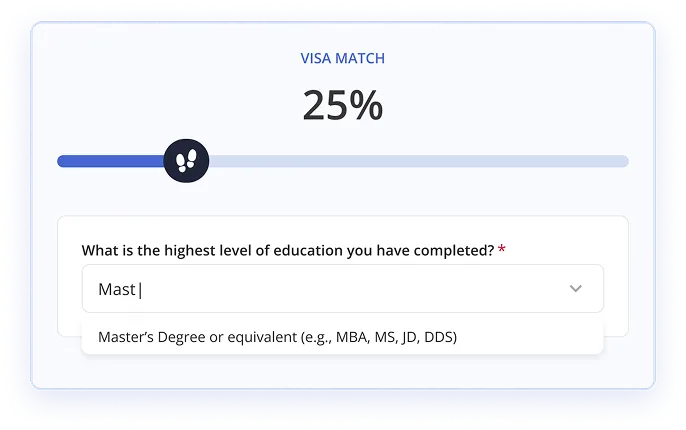
Not sure whether O-1A or O-1B is the right fit? Take the free Visa Match assessment to compare your options, or book a free intro call to discuss your case with our immigration team.
| Detail | O-1B (Arts) | O-1A (Business) |
|---|---|---|
| Criteria required | At least 3 out of 6 | At least 3 out of 8 |
| Annual cap | None (no lottery) | None (no lottery) |
| Degree required | No | No |
| Minimum salary | None | None |
| Self-petition allowed | No | No |
| Agent sponsorship | Yes | Yes |
| Initial validity | Up to 3 years | Up to 3 years |
| Extensions | 1-year increments, unlimited | 1-year increments, unlimited |
| Premium processing fee | $2,805 (increasing to $2,965 on March 1, 2026) | $2,805 (increasing to $2,965 on March 1, 2026) |
| Premium processing time | 15 business days | 15 business days |
The O-1 is one of the few work visa categories that fits the way creators actually work: project-based, multi-client, and not tied to a single employer. For influencers and content creators with a strong track record, it's a direct route to working in the U.S. without a lottery, a degree requirement, or a minimum salary threshold.
WE CAN HELP
Need more clarity?
Find quick answers to frequent visa questions from our legal experts
Can a worker file Form I-129 on their own behalf?
No. Form I-129 must be filed by the U.S. employer acting as the petitioner.
The foreign national beneficiary cannot self-petition.
The employer is responsible for completing the form, paying the filing fees, and providing supporting documentation to USCIS.
Does an O-1 visa agent have to be my employer?
No. One of the three arrangements makes the agent the actual employer, and the other two do not. An agent can represent both you and the employers, or act in place of a foreign employer that authorized it.
Can you switch from H-1B to O-1 visa status?
Yes. You file a Form I-129 O-1 petition while in H-1B status, with the same petitioner rules as a first-time O-1 filing.
Many foreign nationals make the switch when they hit the H-1B six-year cap without an approved I-140, or when the lottery doesn't go their way and they've built up enough of a record in the meantime to qualify for O-1A.
Do I need a new Form G-28 for every case I file?
Yes. USCIS requires a new Form G-28 for each separate application, petition, or appeal.
Even if the same attorney is handling multiple filings for you, they must submit a new G-28 with each one.
The form applies only to the specific case it is filed with and does not carry over to other matters.
What is “dual intent” and which visas allow it?
Dual intent means you can hold a temporary visa while also intending to apply for permanent residency (a green card).
The H-1B and L-1 visas are true dual intent visas. Most others, such as B-1/B-2, E-2, and F-1, do not permit dual intent, so pursuing a green card from those visas can create complications.
The O-1 is a special case: it is not a dual intent visa by law, but in practice, both USCIS and the Department of State usually treat it as if it were.
Other blogs for every step of your visa journey
You have a valid visa and an EAD at the same time - which one you work on and why it matters
8 mins read | Oct 6, 2026
J-1 Research Scholar, Specialist and Trainee - the three categories employers use
8 mins read | Oct 5, 2026
RFE or NOID - what a notice of intent to deny means for your case
9 mins read | Oct 2, 2026