Your immigration forms - what each one is for and what to check before you sign
9 mins read | Oct 13, 2026
WHAT AN RFE MEANS AND HOW TO RESPOND STRATEGICALLY
Contributor
Tukki
Reading time
7 mins read
Date published
Mar 16, 2026
USCIS Requests for Evidence (RFEs) are quite common and don't sound stressful until it lands in your petition.
If you have got one, then don't panic. An RFE is a clear sign that your petition is under review, which is much better than an outright denial.
Responding strategically to an RFE lays the groundwork for approval. In fact, 85.15% of H-1B petitions that received an RFE were approved, and 71.59% of L-1A petitions with an RFE were approved in 2025 Q3.
We will cover the most common RFEs issued for different visa types and ways to handle them in this article.
A USCIS Request for Evidence (RFE) is an official notice that immigration officers send demanding additional information/clarification, or documents to process your application. It is raised as a Form I-797E, formally called Notice of Action: Request for Evidence (RFE).
An RFE gives you a clear roadmap of exactly what evidence will help you get an approval
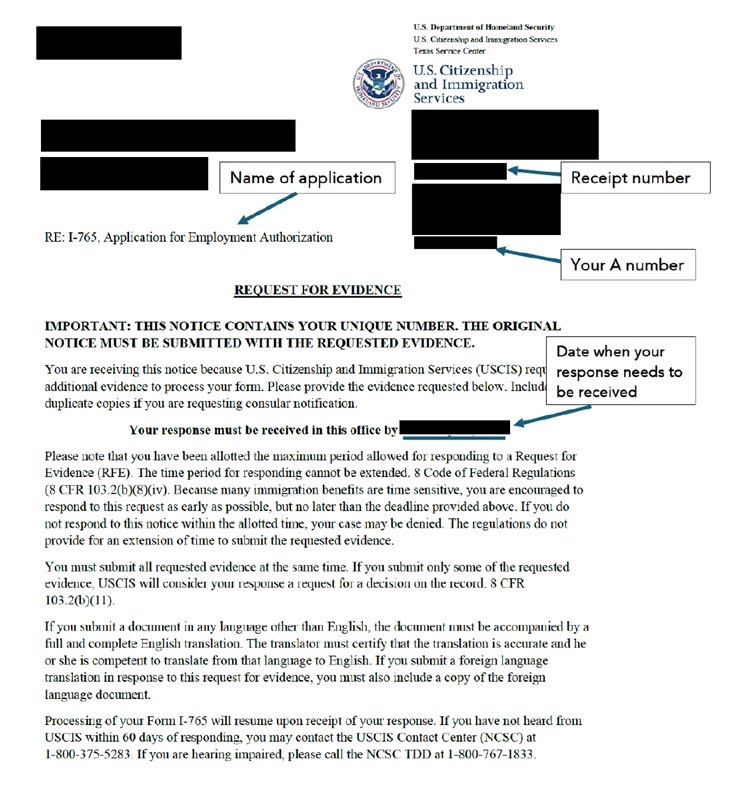
Sample RFE notice | Source: ASAP
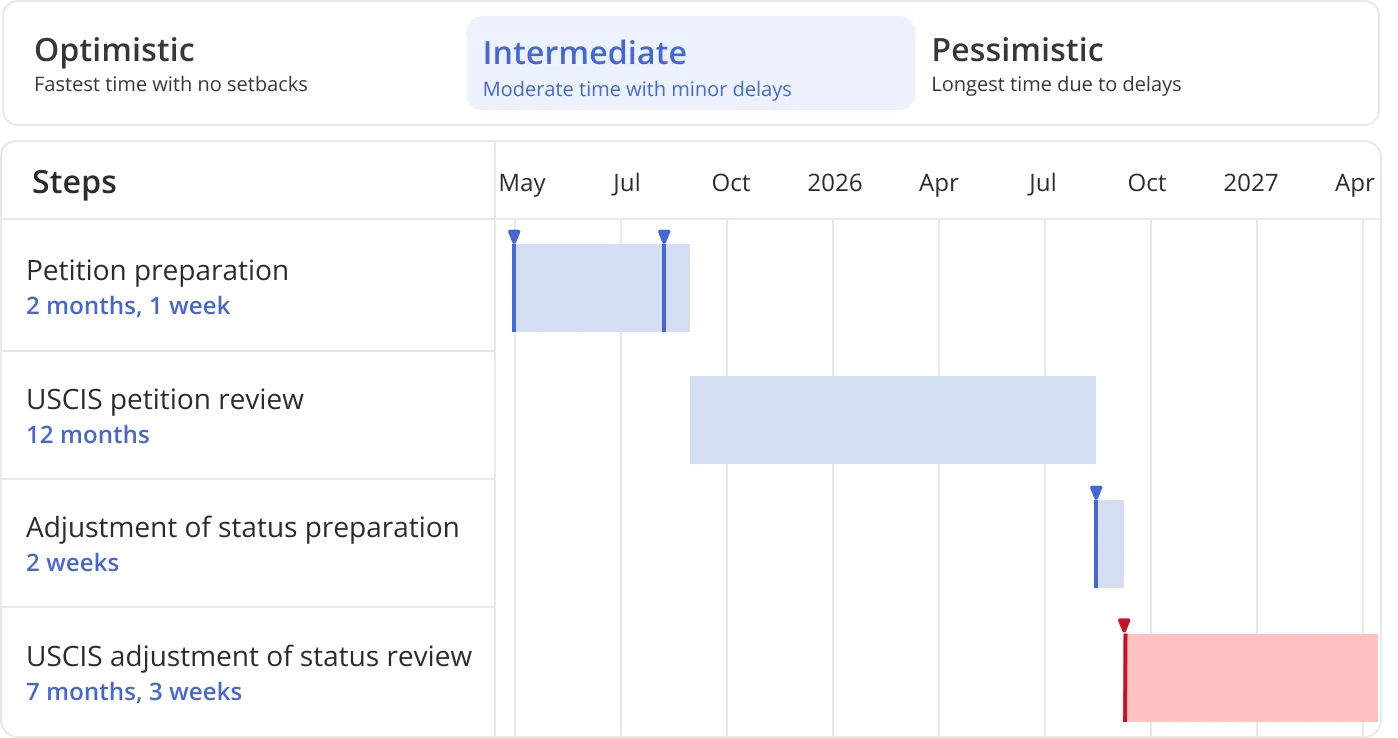
An RFE typically increases VISA processing time by 3-5 months. Firstly, USCIS gives you a maximum of 12 weeks to respond to an RFE (the deadline is stated in the RFE). After receiving your response, USCIS usually takes at least 45 additional business days, which can be longer for complex cases.
If you have filed for premium processing, then USCIS resets the clock after receiving your RFE response and generally must take action within 15 business days in most cases.
A well-drafted response to RFE increases your approval rates. In fact, as per USCIS 2025 Q3 data, 66% to 86% of cases are approved after an RFE for different visa types, depending on the complexity.
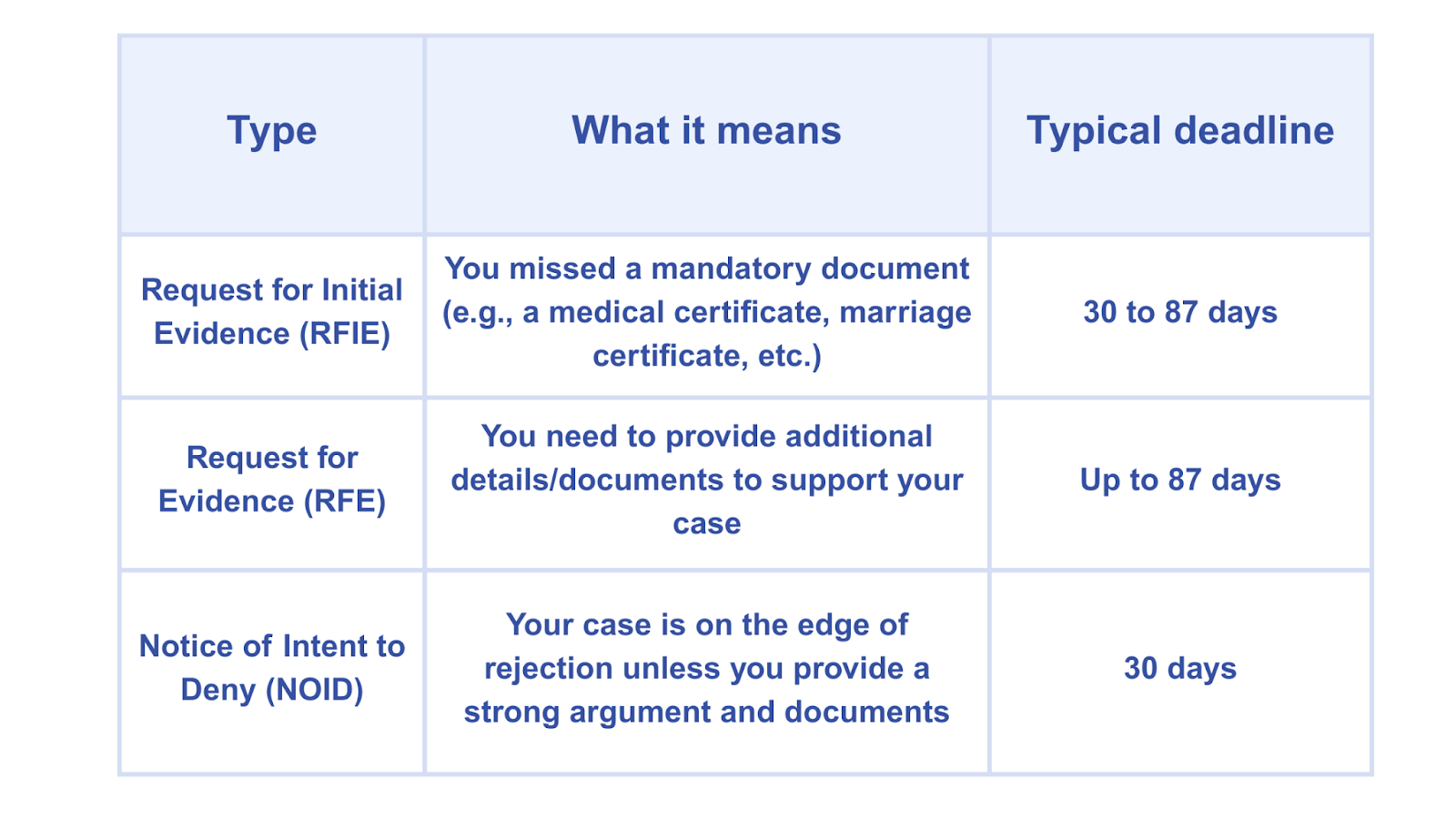
Not every USCIS notice is an RFE. It's important to understand the type of notice to correctly assess seriousness, expectations, and response deadlines. You'll see these three other types of notices:
RFIE stands for Request for Initial Evidence, which means you forgot to submit some mandatory documents to initiate the process. For example, birth certificates, educational documents, marriage certificates, etc.
RFIE is lower severity than RFE, but it resets the clock, adding to processing timelines. You get 30 to 87 days to respond as per the deadline specified in the notice.
A NOID (Notice of Intent to Deny) is a red flag notice stating that a USCIS officer has already decided to deny the petition unless you provide a strong argument. These could be due to marriage fraud suspicions, failure in background checks, legal issues, etc.
NOID is much more urgent than RFE, with only a 30-day response window. NOID clearly lowers the chances of approval and needs a strategic response.
Here we've compiled some of the most common RFEs issued. We'll break down what USCIS expects in that RFE. The best way to handle it is to address their exact needs.
USCIS is finding your job description too vague. Resend a clear job description highlighting limited but specific duties related to the SOC code.
An advanced degree equivalency RFE means USCIS isn't convinced you are holding the qualifications for the visa. You must produce all required educational transcripts for the position. In case your degree is outside of the U.S., add a credential evaluation document from a reputable source.
USCIS is not convinced that your job requires specialized knowledge. You need to convince them with a detailed job description or an expert opinion letter as supporting evidence.
USCIS is finding an inconsistency in your documents on the actual work location. Add all work locations (including home address if remote work is permitted) in LCA, an end-client letter (if applicable) mentioning their address, and a commercial lease agreement proving the office exists.
USCIS is finding a mismatch between job duties and wage level. Your employer needs to clearly map how the job description and your experience align with the wage level (Entry/Intermediate/Senior/Expert). If the issue is a wage mismatch with the work location, share details on how the wage complies with the location's wage requirements.
USCIS typically issues this RFE to consulting, staffing, and early-stage companies when they suspect there is insufficient work for the applicant. Your employer must submit existing client contracts or in-house project plans to prove enough work is available.
You may get this RFE if you are holding a leadership or executive role. USCIS finds your employer to be too early to be hiring an executive hire. Understanding what USCIS considers a qualifying executive or managerial position can help you build your case. In such a case, your employer can present future business or hiring plans to justify the hire.
USCIS doesn't think your employer is stable enough to pay wages committed to you. They must share their tax returns, balance sheets, payroll records, assets, and liabilities to prove their continuous ability to pay.
USCIS needs evidence that your work is first original (e.g., patents, new software, unique research) and significant (it has been used or cited widely). Share your patents, citation counts, awards, media coverage, or expert testimonials (good if it can highlight the economic impact of change). You can also use independent expert letters to explain your contribution and how it matters to the field.
USCIS is not convinced that you are meeting the statutory criteria required for the visa. Check all your documents in the petition, add a table of contents, and provide a clear cover letter explaining how you are eligible. Make it easy for USCIS officers to navigate the application. Don't expect them to interpret things.
With this RFE, USCIS is saying they understand your work, but don't get how it is of national importance. You must submit government reports that show how your work is in one of the fields tied to U.S. economic or strategic needs. Then you can attach your research documents or expert testimonies that explain how your work is disruptive or extraordinary in the field and how it can add more value in the future.
With petitions, there is always a trade-off: file fast with less effort, or invest more time and craft a stronger petition, says Ramiro Roballos, Co-Founder and CEO at Tukki.ai.
He says now is the moment to go the extra mile, put in the extra work, strengthen your evidence, polish your narrative, and not be afraid to take a few extra weeks. An RFE or denial will cost far more time, stress, and effort than doing it right upfront. They're not inevitable -- but with careful preparation, you can reduce the chances of running into them.
Read the following key tips to avoid an RFE.
USCIS provides a detailed checklist to avoid RFE. Use the checklist to prevent mistakes and RFEs:
Don't just dump documents. Create a table of contents, appropriate numbering, and add supporting documentation. Make it easy for USCIS officers to break everything down.
Also, follow a narrative throughout. Don't expect an USCIS officer to connect the threads for you. For example, if you speak of an exceptional contribution, add metrics of its results or expert testimony showing the importance of the work.
Address maximum potential issues USCIS may flag in advance. For example, if there are any gap years in your resume, explain them up front. Consulting with an immigration attorney can help you identify all potential red flags and ways to manage them.
Tukki helps you create solid applications with a consistent narrative. Our immigration attorneys identify your strong points and address all potential red flags in advance. We also help you handle all RFEs strategically at no additional cost. We own the application and refile it in case of a denial with no extra charge.
Learn upfront about visa pricing covering USCIS fees, RFEs, and refiling.
WE CAN HELP
Need more clarity?
Find quick answers to frequent visa questions from our legal experts
How long does a green card interview take?
Most run 20 to 30 minutes at the window, with a longer wait beforehand. Plan for the appointment to take a couple of hours in total.
Can I be in the H-1B lottery while on OPT?
Yes. Most H-1B beneficiaries are F-1 students or recent grads on OPT or STEM OPT. Your employer registers you in March, and if you're selected, they file Form I-129 between April 1 and June 30.
Cap-gap then extends your OPT until October 1 if all three conditions are met: you're in the U.S., your OPT is valid at the I-129 receipt date, and the petition requests change of status.
Does switching immigration attorneys restart my petition?
No, switching attorneys does not restart your petition. Your filing date, receipt number, priority date, and any evidence already submitted all stay in place.
Changing counsel is a representation change, not a new application, so your position in the queue is unaffected.
How long does EB-2 NIW processing take?
Standard EB-2 NIW processing for the I-140 petition typically runs 6 to 12 months, depending on USCIS service center workload. With premium processing, USCIS gives an initial response within 45 business days.
The bigger variable is your priority date: applicants born in India or China can wait several years for a green card because of the EB-2 backlog, while most other countries wait far less. Our visa bulletin guide explains how to track it.
Do musicians qualify for the O-1B visa?
Yes. The O-1B visa covers individuals with extraordinary ability in the arts, and musicians, whether performers, composers, producers, or session players, fall directly into this category.
You need to meet at least 3 of the 6 O-1B criteria with documented evidence. The bar is "distinction" or "extraordinary ability" in your field, not global fame, so a strong professional career with recognizable milestones often qualifies.
Other blogs for every step of your visa journey
Your immigration forms - what each one is for and what to check before you sign
9 mins read | Oct 13, 2026
How to write an RFE response letter and organize the evidence behind it
9 mins read | Oct 12, 2026
Laying off a sponsored employee on H-1B: what the company owes and what the employee has left
8 mins read | Oct 9, 2026