You have a valid visa and an EAD at the same time - which one you work on and why it matters
8 mins read | Oct 6, 2026
WHAT THE CONSULAR OFFICER IS REALLY LOOKING FOR AND HOW TO SHOW IT
Contributor
Tukki
Reading time
7 mins read
Date published
Mar 26, 2026
Your U.S. visa interview is the single most important step in the nonimmigrant visa application process, and it's shorter than most people expect. The actual conversation with a consular officer typically lasts two to five minutes for a B-1/B-2 visa. During that time, the officer decides whether you qualify for the visa you've applied for and whether you'll return to your home country after your trip. If both answers are yes, you'll likely walk out with an approval.
The best way to prepare for a U.S. visa interview isn't to memorize scripted answers. It's to understand what the officer is evaluating, bring the right documents, and give clear, honest responses. This guide covers the full process: what happens when you arrive at the consulate, the questions you'll face, the documents you need, and the common mistakes that lead to denials.
Most nonimmigrant visa applicants between ages 14 and 79 must attend an in-person interview at a U.S. embassy or consulate. Before your appointment, you'll need to complete the DS-160 online nonimmigrant visa application, pay the MRV (Machine Readable Visa) fee of $185 for B-1/B-2 visas, and schedule your interview through the embassy's appointment system.
On the day of your interview, plan to arrive at least 30 minutes early. You'll pass through security screening, where guards check your documents and confiscate prohibited items like electronics and large bags. After security, you'll enter a waiting area and join a queue. When your number is called, you'll approach a window where a clerk verifies your identity and collects your fingerprints (biometrics). Then you'll wait again until a consular officer calls you to a second window for the interview itself.
The entire visit, including waiting time, usually takes one to three hours. The interview portion, however, is surprisingly brief: two to five minutes for most B-1/B-2 applicants. The officer already has your DS-160 answers, so the conversation focuses on confirming key details and assessing your credibility.
Every consular officer is trained to assess two things:
The second question is where most applicants run into trouble. Under Section 214(b) of the Immigration and Nationality Act, every nonimmigrant visa applicant is presumed to have immigrant intent, meaning the officer assumes you plan to stay permanently in the U.S. unless you prove otherwise. This is the most common reason for visa denials, and it's why the officer spends most of the interview probing your ties to your home country: your job, your family, your property, and your reasons to go back.
Your goal isn't to convince the officer you'd never want to live in the U.S. It's to demonstrate that you have strong enough connections at home that you won't overstay your visa. The stronger your ties, the easier this conversation becomes.
Consular officers don't follow a rigid script, but they consistently ask questions from a few predictable categories. Knowing why each question is asked helps you give answers that directly address the officer's concern.
The officer will ask something like "Why are you traveling to the United States?" or "What will you do there?" Give a specific, concise answer. "I'm attending my cousin's wedding in Houston on April 15th" is much stronger than "I want to visit America." If you're traveling for business on a B-1 visa, explain the specific meetings, conference, or training you'll attend. Vague answers raise red flags because they suggest you don't have a clear plan.
Expect questions like "What do you do for work?", "Do you own property?", and "Do you have family here?" The officer is building a picture of what keeps you rooted at home. A stable job, a business you run, property ownership, school enrollment, or close family members who depend on you all serve as evidence that you'll return. Answer these questions with specifics: your job title, how long you've worked there, or the ages of your children.
"Who is paying for your trip?" and "How much do you earn?" help the officer determine whether you can afford the trip and whether you might be tempted to work illegally in the U.S. If a sponsor is funding your visit, be ready to explain the relationship and show proof of their financial support. If you're paying yourself, bank statements and pay stubs back up your claim.
"Have you traveled to other countries before?" and "Have you ever been denied a visa?" reveal your travel patterns and immigration history. A record of international travel with timely returns strengthens your case, since it shows you've respected visa terms before. If you've been denied a visa in the past, answer honestly and briefly explain what has changed since then.
Arriving with organized documents makes a strong impression and speeds up the process. Consular officers don't always ask to see supporting documents, but when they do, fumbling through a disorganized stack hurts your credibility.
Required documents you must bring:
| Document | Why it's needed |
|---|---|
| Valid passport | Must be valid for at least six months beyond your intended stay |
| DS-160 confirmation page | Proves you completed the online visa application |
| Interview appointment letter | Confirms your scheduled consulate appointment |
| Passport-size photo | Meets U.S. visa photo requirements (2x2 inches) |
| MRV fee payment receipt | Proves you paid the $185 application fee |
Supporting documents to strengthen your case:
Bring originals (not just copies) of documents that prove your ties to home and your ability to fund the trip. These include bank statements from the past three to six months, an employment letter stating your position and salary, property deeds or lease agreements, a travel itinerary with flight bookings, an invitation letter from your host in the U.S. (if applicable), and school enrollment records if you're a student.
Keep everything in a clear folder, organized by category. If the officer asks for your bank statement, you should be able to hand it over within seconds rather than shuffling through a pile of papers. The more prepared you appear, the more confident the officer feels about your application.
Knowing what to avoid matters as much as knowing what to do. These are the most common mistakes that turn otherwise strong applications into visa refusals.
Inconsistencies between your DS-160 and interview answers. The consular officer has your DS-160 on screen during the conversation. If your spoken answers contradict what you wrote on the form, it raises serious credibility concerns. Before your appointment, review your DS-160 responses so you're consistent.
Over-explaining or volunteering unnecessary information. Answer the question that was asked, then stop. Rambling or adding details the officer didn't request can introduce contradictions or raise new concerns. If the officer wants more detail, they'll ask a follow-up question.
Rehearsed or robotic-sounding answers. Officers talk to dozens of applicants every day and can tell when someone is reciting a memorized script. Prepare your key points, but deliver them conversationally. The goal is a natural conversation, not a performance.
Being vague about your travel plans. "I want to see the sights" doesn't reassure an officer that you have a specific, limited purpose for your visit. Know your dates, destinations, and the reason for your trip before you sit down at the window.
Bringing an entourage to the consulate. Some applicants bring family members, agents, or friends to "help" during the interview, but only the applicant speaks with the officer. Extra people in the waiting area don't strengthen your case and can create confusion.
If your visa application was recently denied, understanding why is the first step toward a successful reapplication. For a detailed walkthrough of what to do after a refusal, read our guide on what to do after a visa denial.
Find the right visa for your situation
The consular officer will tell you the outcome before you leave the window. There are three possible results.
Visa approved. The officer keeps your passport and affixes the visa stamp. You'll pick up or receive your passport by courier within a few business days, depending on the consulate. This is the most common outcome for well-prepared applicants with strong ties to their home country.
Visa denied under Section 214(b). The officer hands you a refusal letter explaining that you didn't overcome the presumption of immigrant intent. This doesn't ban you from reapplying. You can submit a new visa application at any time, though it helps to address the reason for the denial by strengthening your documented ties or clarifying your travel purpose.
Administrative processing. The officer keeps your passport for additional review, which can take several weeks to several months. Administrative processing isn't a denial: it means your case needs further vetting, often for security or background checks. The consulate will contact you once a decision is made.
Regardless of the outcome, stay polite and professional. Officers process hundreds of cases, and how you handle the interaction matters. If you're denied, ask the officer if they can clarify what was missing from your application so you can prepare better for a future attempt.
The interview window itself typically lasts two to five minutes for a B-1/B-2 nonimmigrant visa. More complex visa categories or cases that require additional questioning can take longer, but even ten minutes is unusual. The waiting time at the consulate is what adds up: most applicants spend one to three hours at the embassy from arrival to departure.
Schedule your interview as early in the day as possible, since morning slots tend to have shorter wait times. If you need your passport back by a specific date for travel, factor in processing time after approval. Some consulates return passports within two to three days, while others take up to two weeks.
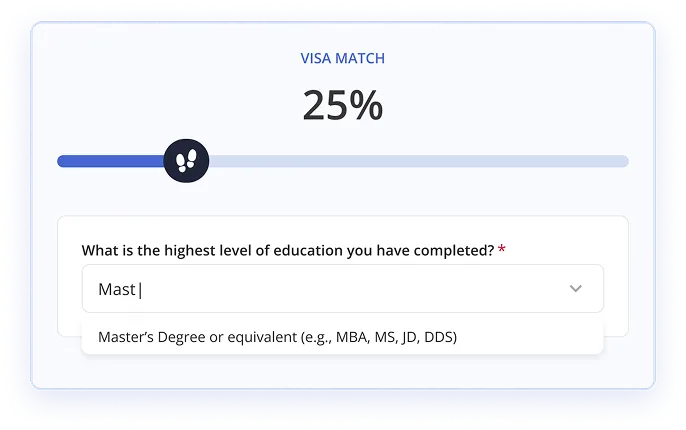
For applicants exploring U.S. work visa options, the interview process is similar across most nonimmigrant visa categories. H-1B, L-1, O-1, and E-2 applicants all attend a consular interview, though the questions focus more heavily on employment details and the specific visa requirements. If you're unsure which work visa fits your profile, the Visa Match tool can help you compare your options.
WE CAN HELP
Need more clarity?
Find quick answers to frequent visa questions from our legal experts
Can my spouse work on a TD visa?
No. Your spouse and children under 21 can accompany you in TD status and can study in the United States, but TD dependents are not authorized to work.
For a look at which visas do let a spouse work, see our spouse work authorization guide.
How much do I need to invest for an EB-5 visa?
The current minimum is $800,000 if you invest in a targeted employment area (a rural area or a high-unemployment area) or a qualifying infrastructure project, and $1,050,000 for a standard investment elsewhere.
These amounts have applied to petitions filed since March 15, 2022 and are scheduled to adjust for inflation starting January 1, 2027.
Do master’s degree holders get two chances in the lottery?
Yes. Individuals with a master’s degree or higher from a U.S. institution of higher education receive two chances in the H-1B lottery.
They are first entered into the regular H-1B cap of 65,000 and, if not selected, entered again into the H-1B master’s cap of 20,000.
Can I work or travel while my I-485 is pending?
Yes, if you filed the companion applications. Form I-765 gives you an employment authorization document and Form I-131 gives you advance parole for re-entry. Both are adjudicated on their own timelines, separate from the I-485.
How long does a U.S. visa interview take?
The actual conversation with the consular officer lasts two to five minutes for most B-1/B-2 visa applicants. Plan to spend one to three hours at the consulate overall, since security screening, biometrics collection, and waiting in line take up most of the visit.
Morning appointments tend to have shorter wait times.
Other blogs for every step of your visa journey
You have a valid visa and an EAD at the same time - which one you work on and why it matters
8 mins read | Oct 6, 2026
J-1 Research Scholar, Specialist and Trainee - the three categories employers use
8 mins read | Oct 5, 2026
RFE or NOID - what a notice of intent to deny means for your case
9 mins read | Oct 2, 2026