The 90 day rule in immigration - changing status after you enter on a B-1/B-2
9 mins read | Sep 15, 2026
FIFA PASS ISN'T A VISA, HERE'S WHAT IT REALLY DOES
Contributor
Tukki
Reading time
7 mins read
Date published
Apr 7, 2026
If you've bought tickets for the 2026 FIFA World Cup, you're probably trying to understand what is the FIFA PASS visa and it actually does. There's a lot of confusion floating around online, with some fans treating it like a special visa and others mistaking it for a modern version of Russia's Fan ID. It's neither.
FIFA PASS stands for FIFA Priority Appointment Scheduling System. It gives eligible ticket holders priority access to schedule a U.S. visa interview appointment at a consulate or embassy. That's it. It doesn't replace the visa application, it doesn't waive any requirements, and it doesn't guarantee you'll be approved for entry. You still need a valid visa or travel authorization to enter the United States, and the consular officer who interviews you will evaluate your case the same way they'd evaluate anyone else's.
The tournament runs from June 11 to July 19, 2026, with matches spread across the United States, Canada, and Mexico. Each host country has its own entry requirements, so your planning shouldn't stop at the U.S. border. Here's how FIFA PASS actually works, who needs it (and who doesn't).
FIFA PASS is a scheduling tool, not a travel document. When visa interview wait times at U.S. embassies and consulates can stretch to weeks or months depending on your country, getting a priority appointment slot makes a real difference. That's the problem FIFA PASS solves: it moves you closer to the front of the interview queue so you can get your visa processed in time for kickoff.
Here's how the FIFA PASS visa process works in 3 steps.
Step 1: Opt in through your FIFA.com account. First, you need to have purchased your World Cup tickets directly from FIFA (resale tickets may not qualify). Log into your FIFA.com account and submit the FIFA PASS opt-in form. This registers you as an eligible ticket holder in the system.
Step 2: Complete your DS-160 visa application. The DS-160 is the standard nonimmigrant visa application form that every B-1/B-2 applicant must fill out. You'll upload your photo, answer the required questions, and pay the visa application fee (the MRV fee). FIFA PASS doesn't skip or shorten this step.
Step 3: Schedule your visa interview. When you go to book your consular appointment, the system checks whether your FIFA ticket holder status matches. If it does, you'll see priority appointment slots that aren't available to the general public. You book one of those slots, attend your interview, and the consular officer makes a decision on your visa the same way they would for any other applicant.
If you'd like to check official sources, you can visit the U.S. Department of State's FIFA World Cup visa page where it is confirmed that FIFA PASS is specifically designed for priority scheduling, not for bypassing any part of the standard visa process.
The biggest misunderstanding about FIFA PASS is that people think it works like the Fan ID from the 2018 World Cup in Russia. During that tournament, the Fan ID (officially called the FAN ID) served as an actual visa-free entry document: you could enter Russia without a visa just by showing your Fan ID and passport. FIFA PASS doesn't work that way at all.
Again, FIFA PASS is not a visa. You can receive a priority appointment through FIFA PASS and still be denied a B-1/B-2 visa at your interview. The consular officer evaluates your ties to your home country, your travel history, your financial situation, and your intent to return, just like any other visa applicant. A World Cup ticket doesn't change that calculus.
FIFA PASS is also not a travel document. It won't get you through passport control at a U.S. port of entry. Only a valid visa stamp in your passport (or an approved ESTA, if you're from a Visa Waiver Program country) gives you permission to present yourself for entry. And even then, the final decision rests with the CBP (Customs and Border Protection) officer at the port of entry.
It also doesn't replace any part of the DS-160 application. You still need to fill out the form, upload your photo, and pay the standard visa fee before scheduling your interview.
Not every foreign national attending the World Cup needs to go through the visa interview process. Citizens of the 42 countries in the Visa Waiver Program (VWP) can travel to the United States for up to 90 days using an ESTA (Electronic System for Travel Authorization) instead of applying for a B-1/B-2 visa.
If you hold a passport from one of these countries, you don't need FIFA PASS at all. You can apply for an ESTA online, and approval typically comes within minutes to 72 hours. The ESTA costs $21 and is valid for two years or until your passport expires, whichever comes first.
Key VWP countries with large soccer fan bases include the United Kingdom, Germany, France, Spain, Italy, the Netherlands, Japan, South Korea, Australia, and Portugal. The full list of 42 countries is available on the CBP Visa Waiver Program page.
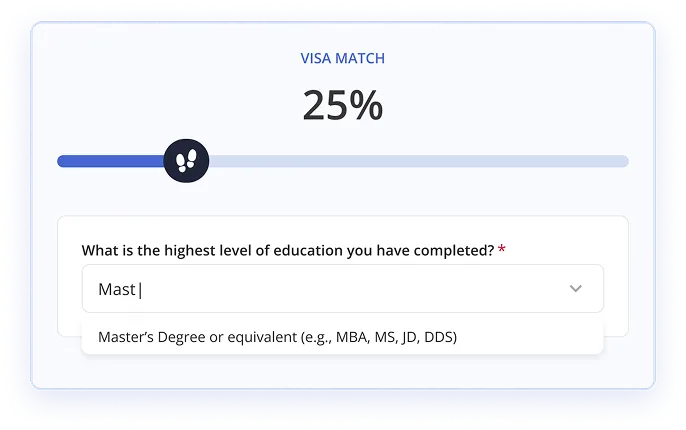
For everyone else, a B-1/B-2 visitor visa is required to enter the United States. The B-1/B-2 is a nonimmigrant visa that covers tourism, business meetings, and events like the World Cup. This is where FIFA PASS becomes relevant: it helps you get a faster interview appointment so your visa can be processed before the tournament starts. If you're unsure which visa category fits your situation, our visa match tool can help you sort through your options.
Even if you qualify for FIFA PASS and get a priority appointment, there are several limitations worth understanding before you build your travel plans around it.
A priority appointment doesn't mean a guaranteed visa. The consular officer at your interview still evaluates your application under the same standards as any other B-1/B-2 case. If you have a history of visa denials, prior overstays, weak financial documentation, or limited ties to your home country, FIFA PASS won't change the outcome. The scheduling advantage only helps with timing, not with the substance of your case.
Resale tickets may not qualify. FIFA PASS requires that you purchased your tickets directly from FIFA through the official platform. If you bought tickets through a resale market or secondary seller, your purchase may not register in the FIFA system, which means you won't be able to opt in for priority scheduling.
FIFA PASS only covers U.S. visa appointments. The 2026 World Cup spans three countries, and FIFA PASS is designed exclusively for scheduling U.S. visa interviews. If your matches are in Canada or Mexico (or if you're planning to attend games in multiple host countries), you'll need to handle entry requirements for those countries separately. FIFA PASS won't help with a Canadian visa or a Mexican tourist card.
Timing matters more than most fans realize. Visa interview wait times at U.S. embassies and consulates vary dramatically by country, and some locations have backlogs of several months. FIFA PASS helps by opening priority appointment slots, but even priority slots can fill up as the tournament approaches, since demand from ticket holders worldwide will be concentrated in a narrow window.
The tournament kicks off on June 11, 2026. If you need a B-1/B-2 visa, the smartest move is to start the process as early as possible. Complete your DS-160 application now, pay the visa fee, and schedule your interview. If you're eligible for FIFA PASS, opt in through your FIFA.com account before looking for appointment slots.
For ESTA applicants, the timeline is more forgiving since approvals typically come within 72 hours. Still, don't wait until the last minute: if your ESTA is denied for any reason, you'll need to fall back to the full visa application process, and that takes much longer. Planning ahead also gives you time to sort out entry requirements for Canada or Mexico if your itinerary includes matches in those countries.
If you need help preparing for your visa interview or understanding which documents to bring, our team can walk you through the process.
FIFA PASS 2026 is a useful tool for one specific purpose: getting a faster U.S. visa interview appointment. For fans traveling from countries that require a B-1/B-2 visa, that scheduling advantage can be the difference between having your visa ready in time and scrambling at the last minute. But it's not a visa, it's not a guaranteed entry pass, and it won't help with Canada or Mexico.
The key steps are straightforward. Check whether your country is part of the Visa Waiver Program. If it is, apply for an ESTA and skip FIFA PASS entirely. If you need a B-1/B-2 visa, opt in for FIFA PASS through FIFA.com, complete your DS-160, and book your priority interview as early as you can. And if your World Cup itinerary crosses borders, make sure you've sorted entry requirements for every host country on your list.
For a breakdown of U.S. work visa costs and how immigration services pricing works more broadly, check our published guides. The World Cup may be a once-in-a-lifetime trip, but the visa process follows the same rules as any other U.S. entry.
WE CAN HELP
Need more clarity?
Find quick answers to frequent visa questions from our legal experts
Is the prevailing wage the same in every city?
No. The OES survey reports wages by metropolitan statistical area, so a Level 2 software developer in Salt Lake City and a Level 2 software developer in San Francisco land at very different dollar amounts even though both sit at the 34th percentile of their local market.
That's why the area of intended employment matters as much as the SOC code when you look up your own prevailing wage.
Do I need a U.S. job offer to apply for an O-1 visa?
Yes. You must have either a U.S. employer or a U.S. agent who files the petition on your behalf.
You cannot self-petition for the O-1. Technically, you can work for a foreign company, but the petition still needs to be filed through a U.S. agent acting as your sponsor.
Is Form I-551 the same as a green card?
Yes. Form I-551 is the official designation of the Permanent Resident Card, which almost everyone calls a green card. The number appears on the card itself, and it also names the temporary I-551 stamp that can stand in for the card.
Can my priority date go backward?
Yes, this is called retrogression. The Visa Bulletin can move cutoff dates forward, hold them steady, or pull them backward if too many applicants have filed against the available numbers.
Retrogression is most common late in the fiscal year (July, August, September) when annual quotas run low. The dates usually move forward again when the new fiscal year starts on October 1.
Can I keep working on OPT while my NIW is pending?
Yes. A STEM PhD on F-1 can typically work on OPT and the 24-month STEM OPT extension while the NIW I-140 is pending, and you can pursue H-1B at the same time.
The NIW is a separate filing, so it runs in parallel with your work authorization rather than replacing it.
Other blogs for every step of your visa journey
The 90 day rule in immigration - changing status after you enter on a B-1/B-2
9 mins read | Sep 15, 2026
O-1 visa checklist - the evidence to start saving a year before you file
9 mins read | Sep 14, 2026
How to choose an immigration lawyer - law firm, boutique, or managed service
9 mins read | Sep 11, 2026