The 90 day rule in immigration - changing status after you enter on a B-1/B-2
9 mins read | Sep 15, 2026
TOURIST VS BUSINESS VISA EXPLAINED
Contributor
Tukki
Reading time
7 mins read
Date published
Apr 3, 2026
Most U.S. consulates stamp a single "B1/B2" in your passport, which makes it easy to assume both categories work the same way. They don't. The B1 vs B2 visa distinction matters every time you enter the country, because CBP (Customs and Border Protection) records your purpose of entry and the activities you're allowed to do depend on which classification you're admitted under.
The B1 covers temporary business activities like meetings and contract negotiations. The B2 covers tourism, family visits, and medical treatment. Cross the line between them, or do something neither one allows, and you risk a denied reentry on your next trip, a revoked visa, or worse.
The B1 visa is a nonimmigrant visa for temporary visitors entering the U.S. for business-related purposes that don't count as employment. That distinction matters more than most people realize: you can attend meetings and negotiate deals, but you can't earn a salary from a U.S. company or perform productive work.
Here's what falls under B1 visa activities:
There's also a lesser-known option called "B1 in lieu of H-1B," which allows certain business visitors to perform work temporarily in the U.S. under specific conditions. The catch: your salary must come from a foreign employer, and the work must be the type that would otherwise require an H-1B. This provision is narrow and fact-specific, so getting it wrong can put your immigration status at risk.
The B1 category exists for people who need a short trip to handle business, not for people looking to work in the U.S. long-term. If your activities go beyond what the B1 allows, you likely need a work visa like the H-1B, O-1A, or L-1A.
The B2 visa is the other half of the visitor visa pair. It covers tourism, pleasure travel, and certain personal activities. If you're coming to the U.S. to see family, go on vacation, or receive medical treatment, the B2 is your category.
B2 visa activities include:
The B2 doesn't cover academic study. If you want to take courses for credit at a U.S. institution, you'll need an F-1 student visa instead. And it doesn't allow any form of employment, even casual or part-time work.
One gray area that comes up often: looking at real estate. You can tour properties and explore neighborhoods on a B2 visa. You can even attend open houses. But if the purpose of your trip shifts toward active business transactions (meeting with agents to make investment deals, for example), you're moving into B1 territory.
Both the B1 and B2 are temporary visitor visas. Neither one authorizes employment in the United States, and violating that rule carries serious consequences.
You can't work for a U.S. employer on a B1 or B2 visa. You can't receive a salary from a U.S. source (except under the narrow B1 in lieu of H-1B provision). You can't practice a profession, provide services for pay, or run a U.S.-based business while on visitor status. If you're physically in the U.S. on a B visa and performing work for a U.S. company, even remotely, that's unauthorized employment.
You also can't study for academic credit. Short recreational courses are fine on a B2, but enrolling in a degree program or certificate course at a college requires an F-1 visa.
Violating these restrictions doesn't just affect your current trip. It can lead to visa revocation, bars on future entry, and complications with any future visa application or green card petition you file down the road.
Most applicants receive a combined B1/B2 visa, a single stamp in their passport that covers both categories. This is standard practice at U.S. consulates and doesn't mean you can switch freely between business and tourist activities once you arrive.
What actually determines your classification is the purpose you declare at the port of entry. When you arrive in the U.S., the CBP officer asks why you're visiting and records your stated purpose on your I-94 arrival record. That record may note whether you entered as B1 (business) or B2 (pleasure), and your activities during the trip should match.
If you tell CBP you're visiting as a tourist but then spend your trip attending business conferences and negotiating contracts, that's a misrepresentation of your purpose of entry. The reverse is true too: entering on B1 for business but spending the entire trip vacationing could raise questions on a future visit.
In practice, many trips involve a mix of both. You might fly to New York for a three-day conference and stay the weekend to see the city. That's normal and generally acceptable, as long as your primary purpose matches what you told CBP. The key word is "primary." A business trip with a personal side excursion is fine. A vacation that turns into a working trip is not.
Real life doesn't fit neatly into two categories, and some of the most common visitor scenarios fall in the space between B1 and B2. Here's how to think through them.
If your primary purpose is tourism and you take one meeting during a two-week trip, most immigration attorneys would say the risk is low. But if business activities become a regular pattern across multiple visits, it could draw scrutiny. Your stated purpose should reflect the main reason for your trip.
Yes. Job interviews are a permissible activity on both B1 and B2 status. You can interview, tour office spaces, and discuss potential roles. What you can't do is start working until you have proper work authorization, like an approved H-1B or O-1A visa petition.
This is a textbook B1 activity. Attending a professional conference, trade show, or training event falls squarely under the B1 business visa, as long as you're not performing productive work at the event (like staffing a booth and making direct sales in some cases).
Absolutely. Social events like weddings, family reunions, and celebrations are classic B2 activities.
Touring properties as a tourist is fine under B2. If the trip's purpose shifts to executing investment transactions or managing property, you may be crossing into B1 territory.
The difference between B1 and B2 comes down to intent: are you there for business reasons or personal ones? When in doubt, be honest with CBP about what you plan to do.
Compare visa options side by side
The visa stamp in your passport and the time you're allowed to stay are two separate things, and confusing them is one of the most common mistakes visitors make.
A B1/B2 visa can be valid for 1 year, 5 years, or even 10 years depending on your country of citizenship. But that validity period only determines how long you can use the visa to request entry at a U.S. port. It doesn't mean you can stay in the country for that entire time.
Your actual authorized stay is determined by the CBP officer when you arrive. The maximum is typically six months per entry, and many visitors receive less. The officer stamps your I-94 record with a specific "admit until" date, and that date is your deadline to leave. Overstaying your I-94, even by a single day, can trigger a ban on future visa applications and create serious problems for your immigration record.
If you need to extend your stay, you can file Form I-539 (Application to Extend/Change Nonimmigrant Status) with USCIS before your I-94 expires. Extensions aren't guaranteed, and you'll need to show a valid reason for the additional time.
For a closer look at what to expect when you arrive, check out the I-94 form explained guide.
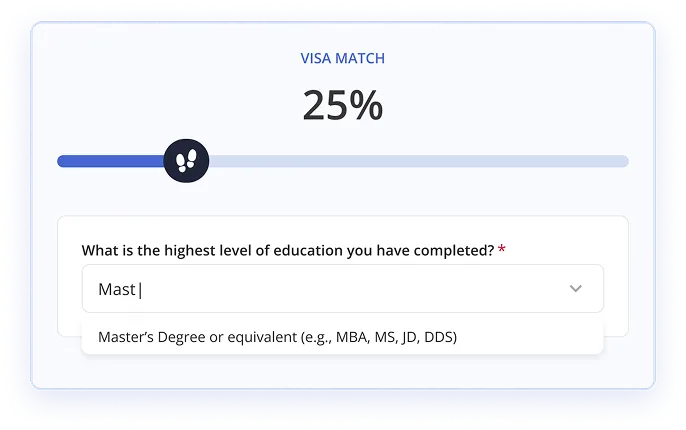
Each of these categories comes with its own visa requirements, processing time, and application process. If you're a skilled professional or business owner trying to figure out which path makes sense, Tukki's Visa Match tool can help you narrow down your options based on your background and goals.
Tukki is a U.S. immigration provider that helps foreign nationals and their employers with work visas and green cards, from H-1B and O-1A to EB-1A and EB-2 NIW, with dedicated attorney support and full case visibility at every step. If you're not sure whether a visitor visa is enough or you need to explore work authorization options, talking to an immigration attorney can save you time and protect your status.
WE CAN HELP
Need more clarity?
Find quick answers to frequent visa questions from our legal experts
What visa interview risk factors lead to permanent inadmissibility?
Material misrepresentation under INA 212(a)(6)(C) is one of the most common grounds for permanent inadmissibility. Certain criminal convictions, particularly controlled substance offenses and aggravated felonies, can also result in permanent bars.
The permanent bar for unlawful presence applies to individuals who accrued over one year of unlawful presence, departed, and then reentered or attempted to reenter illegally.
I already changed status. What should I do before my visa interview?
Reconstruct the timeline from your entry date forward and gather the documents that show what your plans were when you arrived. Organize them under the same headings USCIS uses on the Form I-539 instructions.
Then have an immigration attorney review the file before you book, because a prior misrepresentation question is much easier to address in advance than after a refusal.
What happens if I use my B1/B2 visa for the wrong purpose?
Using your visa for activities outside its permitted scope can lead to denied entry at the port of entry, visa revocation, and bars on future U.S. visa applications.
If CBP determines you misrepresented your purpose of entry, the consequences can affect your ability to return to the U.S. for years. Always declare your actual purpose honestly when entering the country.
Do I need FIFA PASS if my country is in the Visa Waiver Program?
No. Citizens of the 42 Visa Waiver Program countries can use ESTA to enter the United States for up to 90 days without a visa interview. ESTA approval typically takes minutes to 72 hours and costs $21.
FIFA PASS is only relevant for travelers who need a B-1/B-2 visa.
Can I study on a tourist visa in the United States?
You can take short, recreational, non-credit courses on a B2, like a cooking class, language workshop, or fitness certification. Full-time study at an accredited institution for academic credit requires an F-1 student visa.
Enrolling in a degree program or credit-bearing course on a B2 is a visa status violation.
Other blogs for every step of your visa journey
The 90 day rule in immigration - changing status after you enter on a B-1/B-2
9 mins read | Sep 15, 2026
O-1 visa checklist - the evidence to start saving a year before you file
9 mins read | Sep 14, 2026
How to choose an immigration lawyer - law firm, boutique, or managed service
9 mins read | Sep 11, 2026