Form I-290B after a denial: motion to reopen, motion to reconsider, or appeal
9 mins read | Oct 16, 2026
B1 AND B2 VISAS
Contributor
Tukki
Reading time
8 mins read
Date published
Apr 6, 2026
If you hold a B1/B2 visa, every activity you do in the United States falls into one of three categories: clearly allowed, clearly prohibited, or somewhere in between. Knowing what you can do on a B1/B2 visa matters more than most visitors realize, because crossing the line from "permitted" to "unauthorized" can get your visa revoked and make you inadmissible for future U.S. visas. This guide breaks down the specific activities allowed on each visa category, the things that will put your immigration status at risk, and the gray areas where the rules aren't as straightforward as you'd expect.
The B1/B2 is a nonimmigrant visa, meaning it's temporary and tied to a specific purpose. The B1 covers business visitors, while the B2 covers tourism, medical treatment, and personal travel. Most people receive a combined B1/B2 visa stamp, but the activities you're allowed to do depend on which category your trip falls under.
The B1 is designed for short-term business activities that don't involve productive employment in the United States. You can attend meetings with business associates, participate in conferences and trade shows, and negotiate contracts. Board meetings, shareholder meetings, and settlement of estates are all permitted. So is independent research and non-productive training, where you observe operations but don't perform work that benefits the U.S. company.
There's also a narrow exception called "B1 in lieu of H-1B" that allows foreign nationals to perform work duties in the U.S. under specific conditions: you must be paid entirely by a foreign employer, performing services that would otherwise require an H-1B specialty occupation visa, and the work must be short-term. This exception has strict requirements, and misusing it can lead to serious consequences.
The common thread across all B1 activities is that you aren't filling a U.S. job or earning U.S.-sourced income. You're conducting business on behalf of a foreign employer or your own foreign interests.
The B2 covers a wider range of personal activities than most people expect. Tourism and sightseeing are the obvious ones, but visiting family and friends, attending social events like weddings, reunions, and funerals, and participating in amateur sports or cultural events (as long as you're not being paid) are all permitted.
Medical treatment and consultations are explicitly authorized on a B2 visa. You can also take short recreational courses, like a cooking class or music workshop, as long as they're non-credit and not part of a formal degree program. House hunting and purchasing property are allowed, and opening a bank account isn't an immigration violation either, though individual banks have their own policies about account requirements.
| B2 permitted activities | Notes |
|---|---|
| Tourism and sightseeing | Standard B2 purpose |
| Visiting family and friends | No duration restriction beyond I-94 |
| Medical treatment | Explicitly authorized |
| Social events (weddings, funerals) | Attendance, not employment |
| Amateur sports or cultural events | No payment or prize money |
| Short non-credit courses | Recreational only |
| House hunting and property purchase | Buying real estate is permitted |
| Opening a bank account | Not an immigration violation |
| Job interviews | Allowed, but cannot start work |
Job interviews deserve special attention. You can attend interviews on a B2 visa, but you cannot accept a position and begin working. The line is clear: exploring opportunities is fine, starting employment is not.
Some activities are off-limits on any B1/B2 visa, and USCIS (U.S. Citizenship and Immigration Services) treats violations seriously.
Employment for a U.S. employer is strictly prohibited. This includes any arrangement where you receive salary, wages, or payment from a U.S. source. Freelancing, gig work, and contract work for U.S. clients while physically present in the country all violate your B1/B2 visa restrictions. It doesn't matter whether the work is part-time, temporary, or "just a few hours."
Full-time study for academic credit requires an F-1 or M-1 student visa. Enrolling in a degree program or certificate course on a B2 is a status violation. Practicing a licensed profession, such as medicine, law, or engineering, and operating a U.S. business on a day-to-day basis are also prohibited.
The consequences aren't theoretical. If CBP (Customs and Border Protection) or USCIS determines you've worked without authorization, your visa can be revoked on the spot. You may be placed in removal proceedings, barred from reentry, and flagged as inadmissible for future visa applications. Even if nobody "catches" you at the time, the record of your activities exists, and it can surface in a future visa interview or green card application.
This is the question that generates the most confusion, and the honest answer is: it depends. U.S. immigration law doesn't explicitly address remote work for a foreign employer while you're physically in the United States on a visitor visa. That ambiguity creates risk.
Short, incidental work, like checking emails, taking a video call, or handling something urgent for your employer back home while you're primarily on vacation, is generally tolerated. CBP officers understand that business doesn't stop when you board a plane. But "generally tolerated" is not the same as "explicitly authorized," and there's no regulation you can point to that says it's allowed.
Extended remote work is a different story. If you enter on a B2 tourist visa and spend weeks working full-time from a U.S. coworking space for your foreign employer, you're taking a real risk. CBP can argue that your primary purpose in the U.S. is work, not tourism, which contradicts the terms of your visa. Some travelers have been questioned at the border about laptops and work equipment, and inconsistent answers can raise red flags.
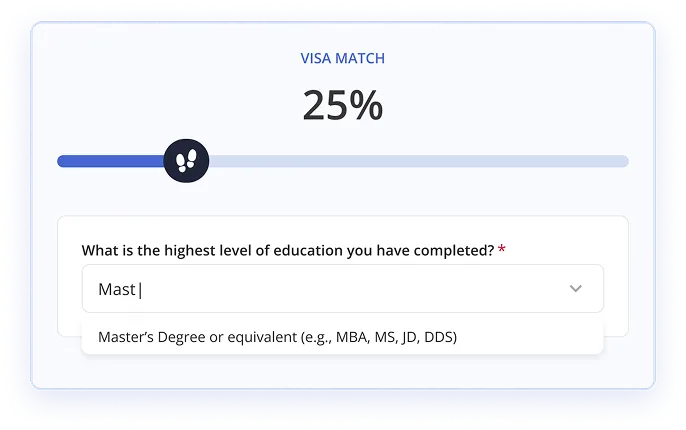
The safest approach: if remote work is your main reason for being in the U.S., a B1/B2 probably isn't the right visa. If you need to work in the U.S. for more than a few incidental tasks, explore visa options designed for that purpose. Our Visa Match tool can help you identify alternatives based on your specific situation.
Yes, you can get married in the United States on a B1/B2 visa. There's nothing in immigration law that prevents a visitor from having a wedding ceremony.
The problem comes with what you do next. If you entered the U.S. on a B2 with the preconceived intent to marry and then file for adjustment of status (the process of applying for a green card while already in the country), USCIS and CBP may view that as misrepresentation. The legal concept is called "preconceived intent," and it can result in your adjustment application being denied or, worse, a finding of fraud.
The distinction matters. Getting married during a legitimate tourist trip and later deciding to pursue a green card is different from entering the country specifically to marry and immediately file paperwork. USCIS looks at the timeline closely: if you file for adjustment of status within 30-90 days of entering on a B2, the agency may presume you had preconceived intent. That presumption is rebuttable, but it puts the burden on you to prove otherwise.
These three activities each have their own set of rules, and lumping them together as "probably fine" is a mistake.
Volunteering is permitted in limited circumstances. Unpaid volunteer work for a charitable or religious organization is generally acceptable on a B2 visa. But if the work you're doing would otherwise be performed by a paid employee, it crosses into unauthorized employment territory. Volunteering at a friend's for-profit business, for example, doesn't qualify as charitable work even if you're not getting paid.
Looking for a job is allowed in the sense that you can attend interviews and explore opportunities. What you can't do is accept an offer and start working before you've changed your visa status or obtained proper work authorization. The line is exploration vs. employment, and it's a hard line.
Starting a business has more nuance than people expect. You can research the U.S. market, meet with potential business partners, attend industry events, and even set up a legal entity. What you cannot do is manage, operate, or work for that business while on a B1/B2. The distinction is between preparatory activity (allowed) and productive work (not allowed). If your plans require hands-on involvement, you'll need a work visa like the E-2 investor visa or an L-1A intracompany transfer.
The consequences of a B1/B2 visa violation go far beyond a warning. If USCIS or CBP determines you've engaged in unauthorized employment or misrepresented your intentions, several things happen.
Your visa is automatically voided. You don't get to finish your trip or wrap things up. You may be placed in removal proceedings and required to leave the country. A violation on your record makes future U.S. visa applications significantly harder, since consular officers will see the violation history and may deny your next application. In serious cases, you can be found inadmissible under the Immigration and Nationality Act (INA), which can trigger three-year or ten-year bars on reentry.
Even activities that seem minor can escalate. Working a few freelance gigs, enrolling in a credit-bearing course, or filing for a green card shortly after arriving on a tourist visa can all trigger scrutiny. The record of your I-94 (your arrival/departure record) stays in the system, and immigration officers have access to it every time you apply for a visa or enter the country.
If you're reading this article because you want to do something that doesn't clearly fit within B1/B2 visa rules, that's a signal you may need a different visa category. The U.S. immigration system has specific visas for work, study, investment, and business operations, and using the right one protects you from the consequences described above.
Tukki is a U.S. immigration provider that helps professionals and business visitors find the right visa path, whether that's an H-1B, O-1A, E-2, L-1, or an employment-based green card, with dedicated attorney support and full case visibility from start to finish.
Find the right visa for your plans
U.S. Department of State visitor visa pageHave a specific "can I do this on my visa?" question that isn't covered here? Book a free intro call to get clarity from an immigration attorney.
WE CAN HELP
Need more clarity?
Find quick answers to frequent visa questions from our legal experts
How long does it take USCIS to process Form I-129?
Standard processing time for I-129 petitions is typically between 2 and 8 months, depending on the service center and visa category.
With premium processing (Form I-907), USCIS guarantees a response within 15 business days.
Processing times can change, so it is recommended to check the USCIS processing times page for current estimates.
Is FIFA PASS the same as the Fan ID from the 2018 World Cup in Russia?
No. The 2018 Fan ID was a visa-free entry document that let ticket holders enter Russia without a separate visa. FIFA PASS 2026 doesn't grant entry to any country.
It's a scheduling tool that gives eligible ticket holders faster access to U.S. visa interview appointments. You still need a valid visa or ESTA to enter the United States.
What is the fastest U.S. work visa to get?
For eligible candidates, the visas without a lottery or labor certification tend to move fastest. The O-1 and L-1A have no annual cap, so a qualified case can be filed at any time, and the TN can sometimes be obtained at the border for Canadian citizens within days.
Speed also depends on whether premium processing is used, which guarantees USCIS action within 15 business days for an added fee, so the right answer depends on the candidate's profile and how urgently you need them.
How many employment-based work visa categories are there?
U.S. immigration groups employment-based green cards into five preference categories, EB-1 through EB-5, though most professional hiring runs through EB-1, EB-2, and EB-3. On the temporary side, the main employment-based visa types include the H-1B, L-1A, O-1, TN, and E-2.
So the practical answer is a handful of temporary categories plus three or four green card categories that cover the vast majority of cases.
Other blogs for every step of your visa journey
Form I-290B after a denial: motion to reopen, motion to reconsider, or appeal
9 mins read | Oct 16, 2026
EB-2 NIW approval rate: what the published numbers show and where cases fail
8 mins read | Oct 15, 2026
Form I-539: how to extend or change your status without leaving the U.S.
8 mins read | Oct 14, 2026