You have a valid visa and an EAD at the same time - which one you work on and why it matters
8 mins read | Oct 6, 2026
H-1B TRANSFER COSTS AND SPEED
Contributor
Tukki
Reading time
8 mins read
Date published
Apr 21, 2026
The H-1B transfer premium processing fee is $2,965, and it guarantees USCIS will review your petition within 15 business days. For H-1B workers switching employers, that speed can mean the difference between starting a new role on time and waiting months in limbo. This guide breaks down what employers actually pay for an H-1B visa transfer, how long each path takes, and when premium processing is worth the upgrade.
When a foreign national with an existing H-1B visa moves to a new employer, the new company files a change-of-employer petition using Form I-129. By default, USCIS processes these petitions in the order they're received, which currently takes 3 to 6 months. That's regular processing.
Premium processing is an optional expedited service. The petitioner (your new employer) files Form I-907 alongside the I-129 petition and pays the premium processing fee of $2,965. In return, USCIS guarantees an initial action on the case within 15 business days. That action could be an approval, a denial, a notice of intent to deny, or a request for evidence (RFE). If USCIS issues an RFE, the 15-business-day clock restarts once the employer responds.
This is the same premium processing service available for other H-1B filings, including initial petitions filed after the H-1B lottery and extensions. The fee and timeline don't change based on the type of H-1B petition.
The premium processing fee is only one piece of the total bill. Every H-1B transfer petition requires several mandatory government fees, and the employer is legally responsible for most of them. The beneficiary (the H-1B worker) can't pay filing fees on the employer's behalf.
Here's what each fee covers:
These are just the government fees. Most employers also hire an immigration attorney, which adds $2,000 to $5,000 or more depending on complexity. For a deeper look at legal costs, see our guide on immigration lawyer costs.
The table below shows total government fees for an H-1B transfer. Attorney fees aren't included since they vary widely.
| Fee | Small employer (1-25) | Large employer (26+) |
|---|---|---|
| I-129 base filing fee | $780 | $780 |
| ACWIA training fee | $750 | $1,500 |
| Fraud prevention fee | $500 | $500 |
| Asylum program fee | $600 | $600 |
| Regular processing total | ~$2,630 | ~$3,380 |
| Premium processing fee | $2,965 | $2,965 |
| Premium processing total | ~$5,595 | ~$6,345 |
For a small employer, upgrading to premium processing more than doubles the government filing costs. For a large employer, it adds about 88%. That's a meaningful jump, which is why it's worth understanding exactly when that extra spend pays off.
Want a personalized estimate for your situation? Check the full breakdown in our H-1B sponsorship cost guide or explore all U.S. work visa costs.
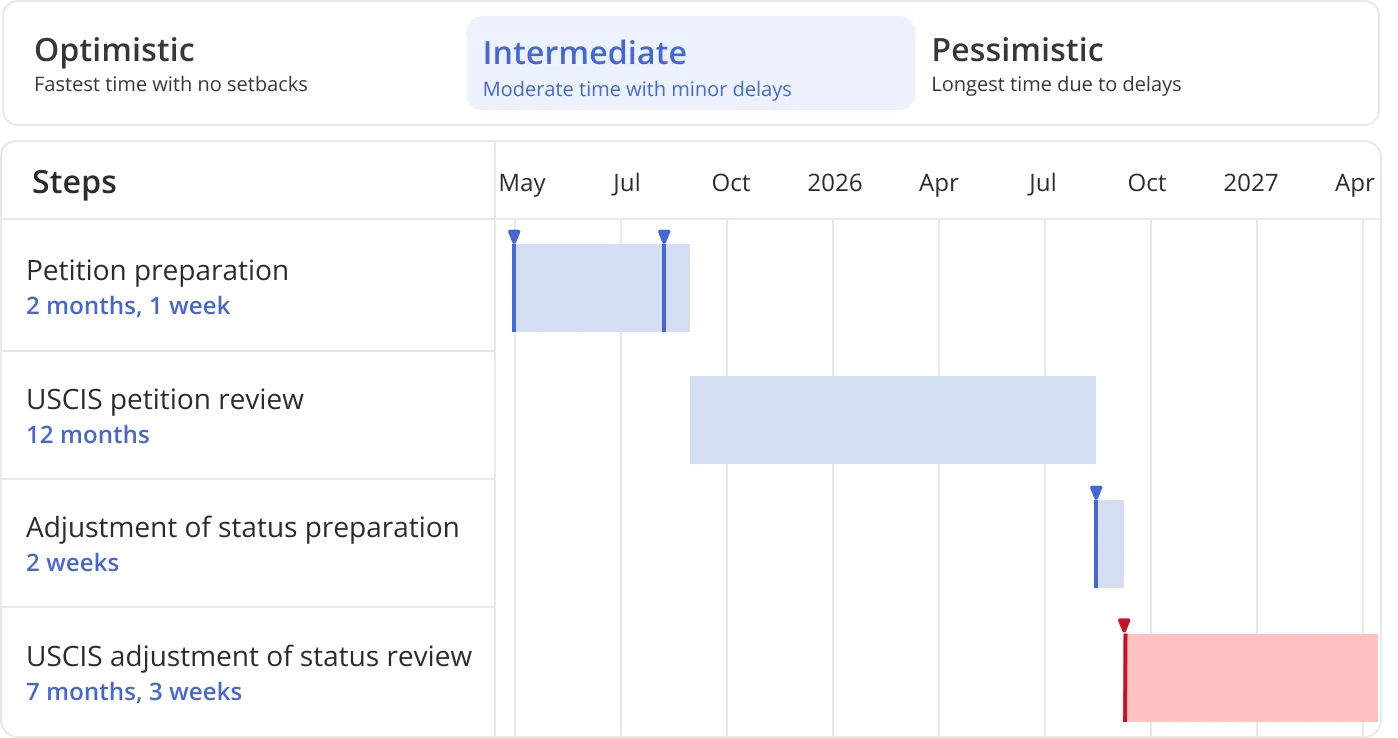
Processing time is often the deciding factor. Here's how the two paths compare.
Regular processing takes 3 to 6 months. Timelines vary by service center, time of year, and case complexity. USCIS publishes estimated processing times on its website, but actual wait times can exceed the posted range during peak filing periods. There's no guaranteed deadline.
One thing to know: an H-1B transfer worker can legally start working for the new employer as soon as USCIS receives the petition, even before it's approved. This is called H-1B portability. So regular processing doesn't necessarily mean you can't start the job. But portability comes with risk. If the petition is eventually denied, the worker must stop working immediately and may need to leave the country.
Premium processing takes 15 business days. USCIS must take initial action within 15 business days of receiving Form I-907 and the associated fee. If they miss the deadline, they refund the $2,965 fee and continue processing the case on a premium basis. Keep in mind that 15 business days translates to roughly three calendar weeks once you factor in weekends.
For workers who can't afford the uncertainty of portability, or who need a confirmed answer before a specific date, premium processing removes that risk much faster than the standard track.
Not every transfer needs premium processing. Here are the situations where paying the extra $2,965 makes clear sense.
If your current H-1B status expires within a few months, waiting 3 to 6 months for regular processing creates real problems. A gap in valid status can affect your ability to work, travel, and maintain legal presence in the U.S. Premium processing gets you a decision before your status runs out.
H-1B workers waiting on a pending transfer petition face complications with international travel. Leaving the U.S. while a petition is pending can be risky, especially without an approved I-797. A 15-business-day turnaround lets you plan trips with a clear answer in hand.
Some employers tie start dates, project timelines, or contract obligations to confirmed visa status. While H-1B portability lets you begin working on receipt, certain regulated industries or government contracts require approved status before an employee can be onboarded. In these cases, a 15-business-day decision makes start-date planning reliable.
If your new employer plans to sponsor you for a green card, having an approved H-1B petition on file simplifies the employer sponsorship process. Starting a PERM labor certification or I-140 petition while your H-1B transfer is still pending adds unnecessary complexity to an already lengthy process.
Regular processing works fine when your current H-1B status won't expire for a year or more, you don't have immediate travel plans, and your new employer is comfortable with H-1B portability. If none of the scenarios above apply, saving the $2,965 is reasonable. You can always upgrade to premium processing later by filing Form I-907 after the initial petition is submitted, though there may be a brief delay while USCIS processes the upgrade request.
The cost to transfer an H-1B visa is already significant for employers, especially smaller companies. Skipping premium processing when the timeline isn't urgent keeps the total H-1B visa transfer fees closer to the $2,630 to $3,380 range rather than pushing past $5,500.
The process itself is straightforward. Your new employer (or their attorney) files Form I-129 along with Form I-907 and pays the combined fees. Both forms go to the same USCIS service center. The USCIS fee schedule confirms current amounts, and it's worth double-checking before filing since fees can change.
The employer can also request premium processing after the I-129 has already been filed. This is useful if the petition has been pending for a while and the H-1B visa transfer processing time is stretching beyond expectations. Filing a standalone Form I-907 converts the pending case to premium processing, and the 15-business-day clock starts when USCIS receives the form.
For a step-by-step walkthrough of the full transfer process, including Labor Condition Application requirements and document checklists, read our H-1B visa transfer process guide. For a broader look at how USCIS premium processing works across visa categories, we've covered that too.
The $2,965 premium processing fee buys speed and certainty. For skilled workers changing jobs with tight timelines, expiring status, or upcoming travel, it's often worth every dollar. For those with plenty of runway on their current visa, regular processing saves money without much downside.
Either way, the total cost to transfer an H-1B visa runs between roughly $2,630 and $6,345 in government fees alone, depending on employer size and processing speed. Knowing these numbers up front helps both employers and foreign nationals plan the transition without surprises.
Tukki helps H-1B workers and their employers manage visa transfers from start to finish, with clear pricing, timeline estimates, and guided filing support. If you're planning a job change and want to understand your options, we can help you figure out the right approach.
WE CAN HELP
Need more clarity?
Find quick answers to frequent visa questions from our legal experts
Who can request to see the public access file?
Anyone. The file is public by design, and it must be available for examination within one working day of the LCA being filed. That includes DOL investigators, competing employers, unions, current or former employees, and members of the general public with no connection to your company.
There is no requirement that a requester explain why they want it.
Can I apply for an H4 EAD from outside the United States?
No. You must be physically present in the United States when you file Form I-765.
If you're abroad, you'll need to first enter the U.S. on a valid visa for H-1B spouse status and obtain or apply for H-4 dependent status before submitting the EAD application.
Which H-1B alternative is easiest to qualify for?
There is no single easiest path, because eligibility turns on your facts. If you are Australian, the E-3 is often the most direct. If you are Canadian or Mexican in a listed profession, the TN can be fast. If your employer has a foreign entity, the L-1 may be straightforward.
The O-1 and the self-petition green cards ask for more evidence but open doors the others do not.
Can I transfer my H-1B visa to another company without my current employer knowing?
Yes. Your new employer files a separate I-129 petition directly with USCIS, and your current employer isn't notified as part of that process. You're under no legal obligation to inform your current employer until you're ready, though practical considerations like employment contracts, non-compete clauses, and notice periods may apply.
Most people wait until they have the USCIS receipt notice before giving notice at their current job.
What are the main eligibility requirements for an H-1B visa?
To qualify for an H-1B visa, you must have a job offer from a U.S. employer for a specialty occupation, meaning a role that requires highly specialized knowledge and at least a bachelor’s degree or higher in a directly related field.
If your degree is from outside the U.S., it must be evaluated for equivalency.
Additionally, the employer must comply with all Labor Condition Application (LCA) requirements, including paying at least the prevailing wage set by the U.S. Department of Labor (DOL) for that occupation and location.
Other blogs for every step of your visa journey
You have a valid visa and an EAD at the same time - which one you work on and why it matters
8 mins read | Oct 6, 2026
J-1 Research Scholar, Specialist and Trainee - the three categories employers use
8 mins read | Oct 5, 2026
RFE or NOID - what a notice of intent to deny means for your case
9 mins read | Oct 2, 2026